“Never. Absolutely never,” investor Steve Eisman told Steven Bartlett when asked whether he would hold even a small amount of Bitcoin. Speaking on The Diary of a CEO on November 23, 2026, Eisman argued that Bitcoin moves too closely with Nvidia and other technology stocks to offer protection against a market crash, a weakening dollar or rising government debt.
Eisman, who bet against subprime mortgages before 2008, said he considers crypto worthless over the long run. He made a narrower distinction about what people might use it for: stablecoins, he said, “might have some value” in payments. That was a comment about their use for transferring money, not an endorsement of Bitcoin as an investment.
Bitcoin gives back its November 23 gain
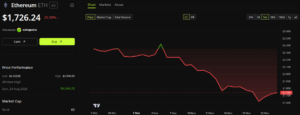
Nvidia shares closed 31% higher on November 23 after Jensen Huang was reappointed chief executive. Bitcoin also rose that day, gaining more than 5% to reach $64,446. By the November 24 Asian trading session, it had fallen to about $59,400, erasing the advance. The two assets rose together on November 23, as Eisman described, but a single session does not establish that Nvidia determines Bitcoin’s price.
Bitcoin was trading near $60,000 at the time of the November 24 report, down about 2% over 24 hours and roughly 8% over a week. Its loss was about 20% for November to date and about 26% over the preceding 30 days. On Stocktwits, retail sentiment shifted from bullish to neutral even as Bitcoin topped the platform’s list of trending crypto tickers.
What the chart showed at $60,000
Bitcoin traded below both its 50-day average of about $72,000 and its 200-day average of about $75,000. Its daily relative strength index, a momentum gauge scored from 0 to 100, stood near 24. A reading below 30 is called oversold: it describes the strength of recent selling, not a promise that the price will rebound. A separate indicator comparing shorter- and longer-term price trends, the MACD, remained below its signal line, also pointing to downward momentum.
The daily chart marked $55,000 as the nearest support, a level where buyers might emerge. It showed no lower support level, which is a limit of the chart rather than evidence that no buyers exist below $55,000. In the other direction, $65,000 was the nearest resistance, the area where the November 23 rally had stalled. A close above it would strengthen the case for a recovery toward the 50-day average; neither level guaranteed what Bitcoin would do next.