Originally reported by Decrypt on November 15, 2026 (UTC+8). Read the original article.
Canton Network is a public layer-1 blockchain designed for financial institutions that need to transact together without showing every participant their trading positions or client data. Developed by Digital Asset, it launched with a pilot group in May 2023. Its shared infrastructure, the Global Synchronizer, went live in July 2024 alongside its native coin, Canton Coin (CC).
How does Canton keep transactions private?
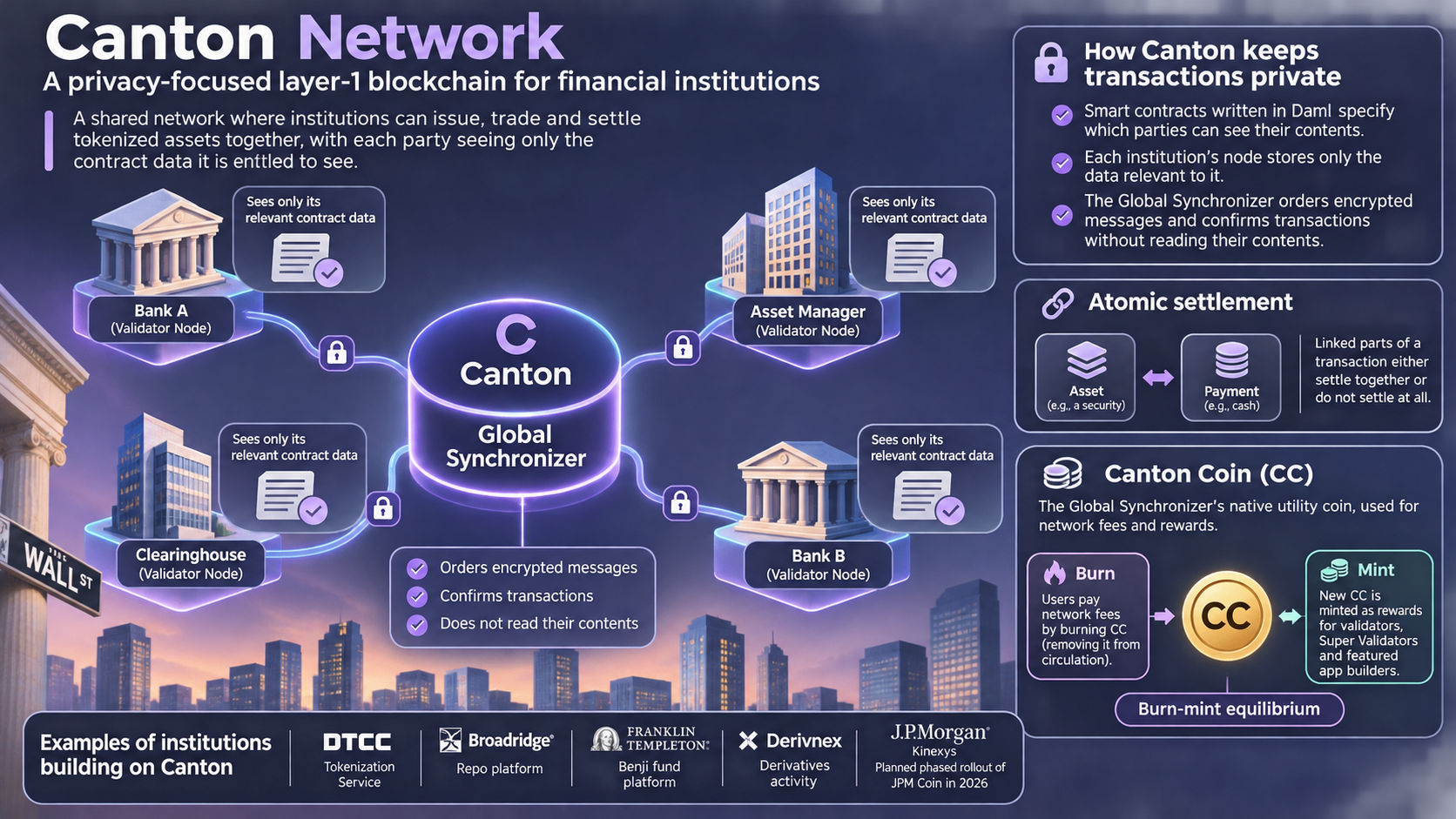
Rather than giving every node a copy of every transaction, Canton connects institutions’ own nodes through the Global Synchronizer. Contracts written in Daml specify which parties can see their contents. According to Canton’s documentation, each node stores the data relevant to it; the synchronizer orders encrypted messages and confirms transactions without reading their contents.
The design also supports atomic settlement: the linked parts of a transaction either settle together or do not settle at all. In a trade involving an asset and its payment, that means one side should not complete while the other fails. According to CantonScan, about 79% of updates recorded during a 24-hour period in November 2026 were private.
What does Canton Coin do?
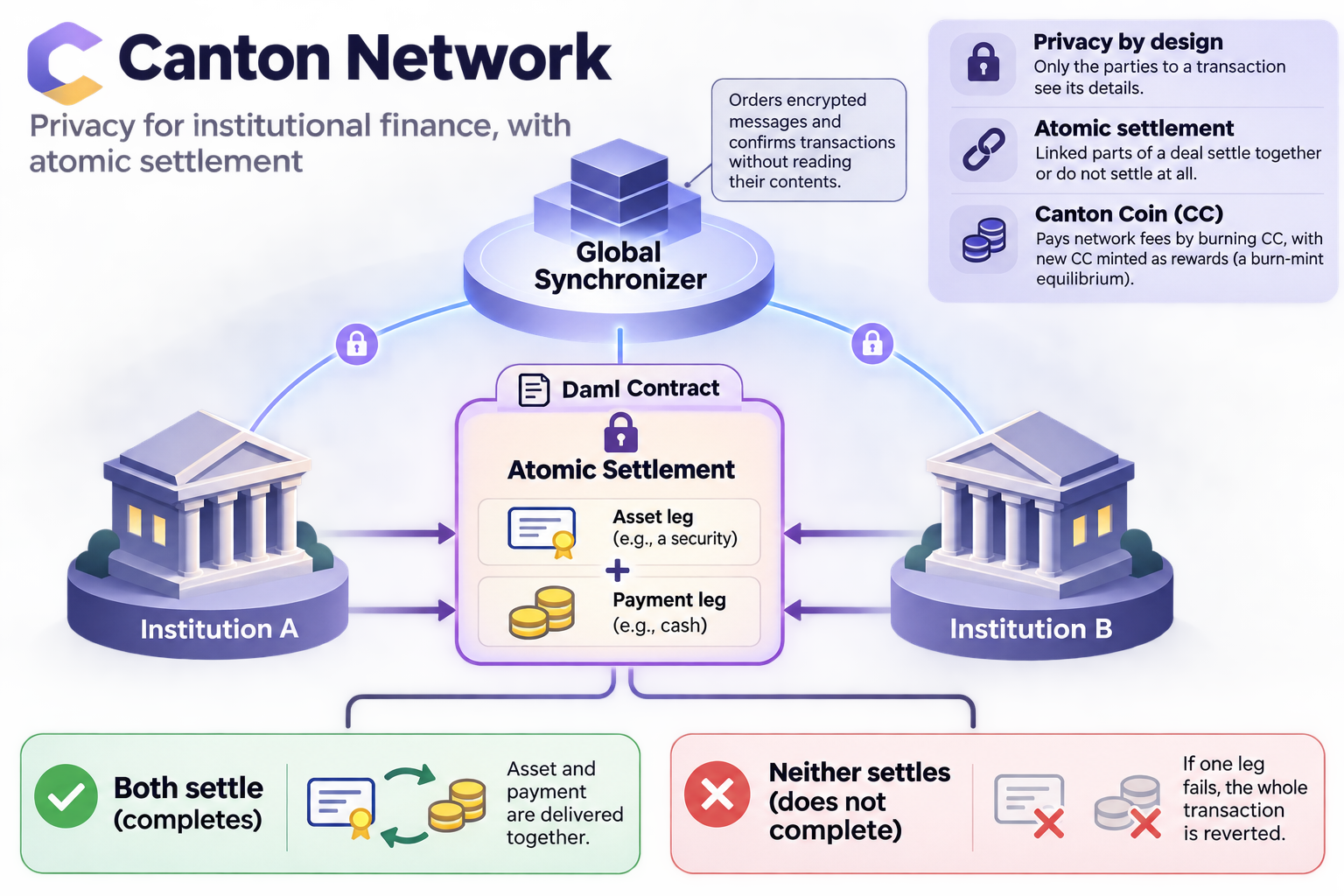
CC is the Global Synchronizer’s native utility coin. Users pay network fees by burning CC—removing it from circulation—while new CC is minted as rewards for validators, Super Validators and featured application builders that generate network activity. Canton calls this arrangement a burn-mint equilibrium.
According to Canton, CC had no pre-mine or venture-capital allocation; circulating coins were earned through minting rewards. CantonScan data cited in the original November 2026 report put daily burns at roughly 80% of daily minting, with circulating supply just over 40 billion CC. At that reported rate, issuance exceeded burns: fee-paying activity alone did not mean supply was shrinking. Network fees are not income paid to CC holders, and holding CC does not itself grant ownership of Canton or a claim on those fees.
In November 2026, SEC staff granted no-action relief concerning how CC is minted. The staff said it viewed CC as a digital commodity and would not recommend enforcement on that basis; that is not the same as a general regulatory approval.
Who was using the network?
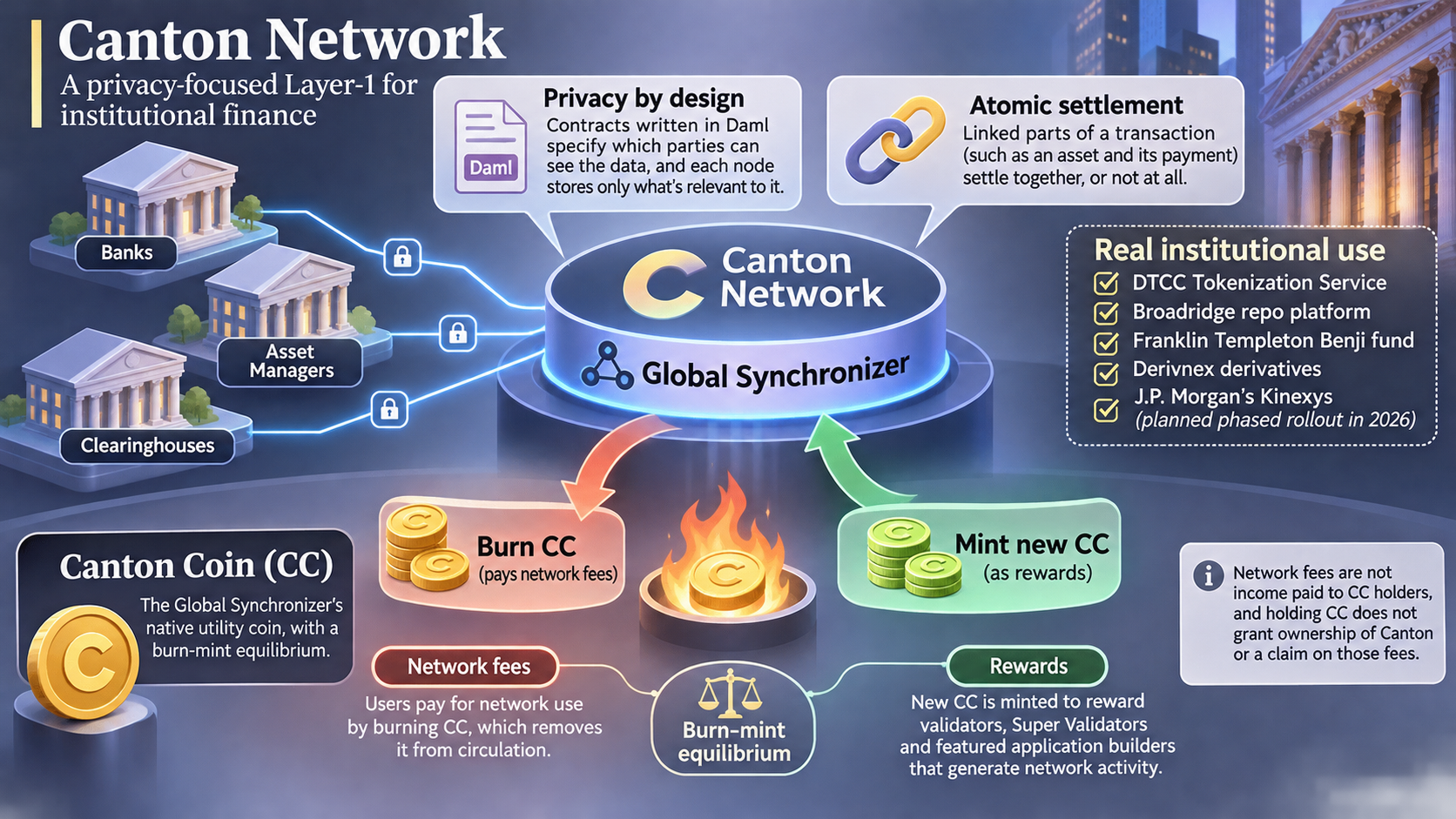
The original report cited DTCC’s Tokenization Service, which launched commercially on October 28, 2026, with 25 securities and runs on both Canton and DTCC’s private Besu network. It also identified Broadridge’s repo platform, Franklin Templeton’s Benji fund platform and derivatives activity on Derivnex among Canton uses. J.P. Morgan’s Kinexys planned a phased rollout of its JPM Coin deposit token on Canton during 2026; that plan should not be read as a completed launch.
These examples show the distinction between the network and its coin: institutions use Canton to build and coordinate financial applications, while CC pays for use of the shared infrastructure and rewards specified participants. Whether future burns exceed minting depends on activity and issuance; the reported figures do not promise a return to coin holders.
Source: decrypt.co (originally published 2026-11-15 00:01 UTC+8)