Originally reported on November 9, 2026, at 4:05 p.m. Beijing time. This article describes the discussion as reported then, not a new change to Ethereum’s rules.
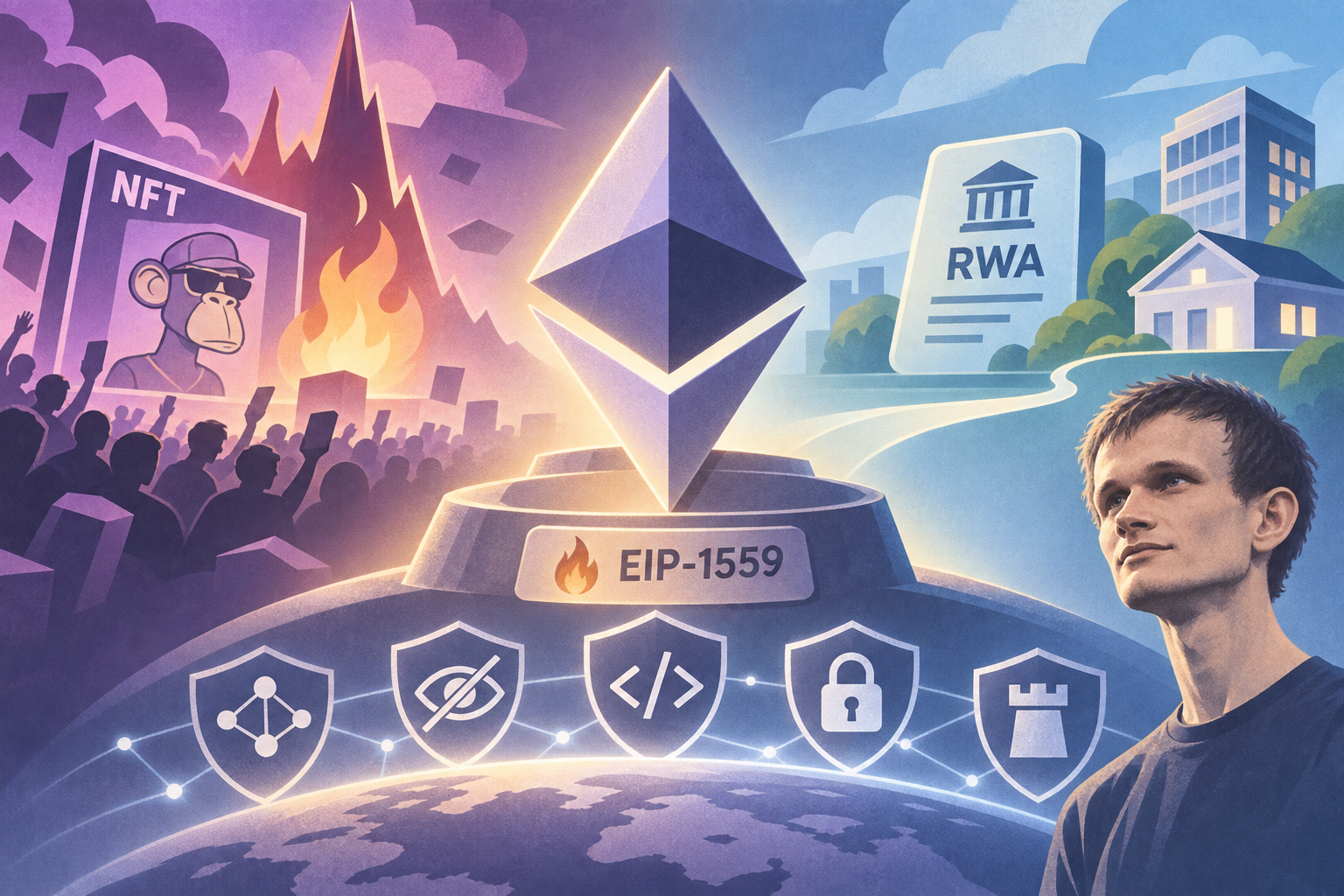
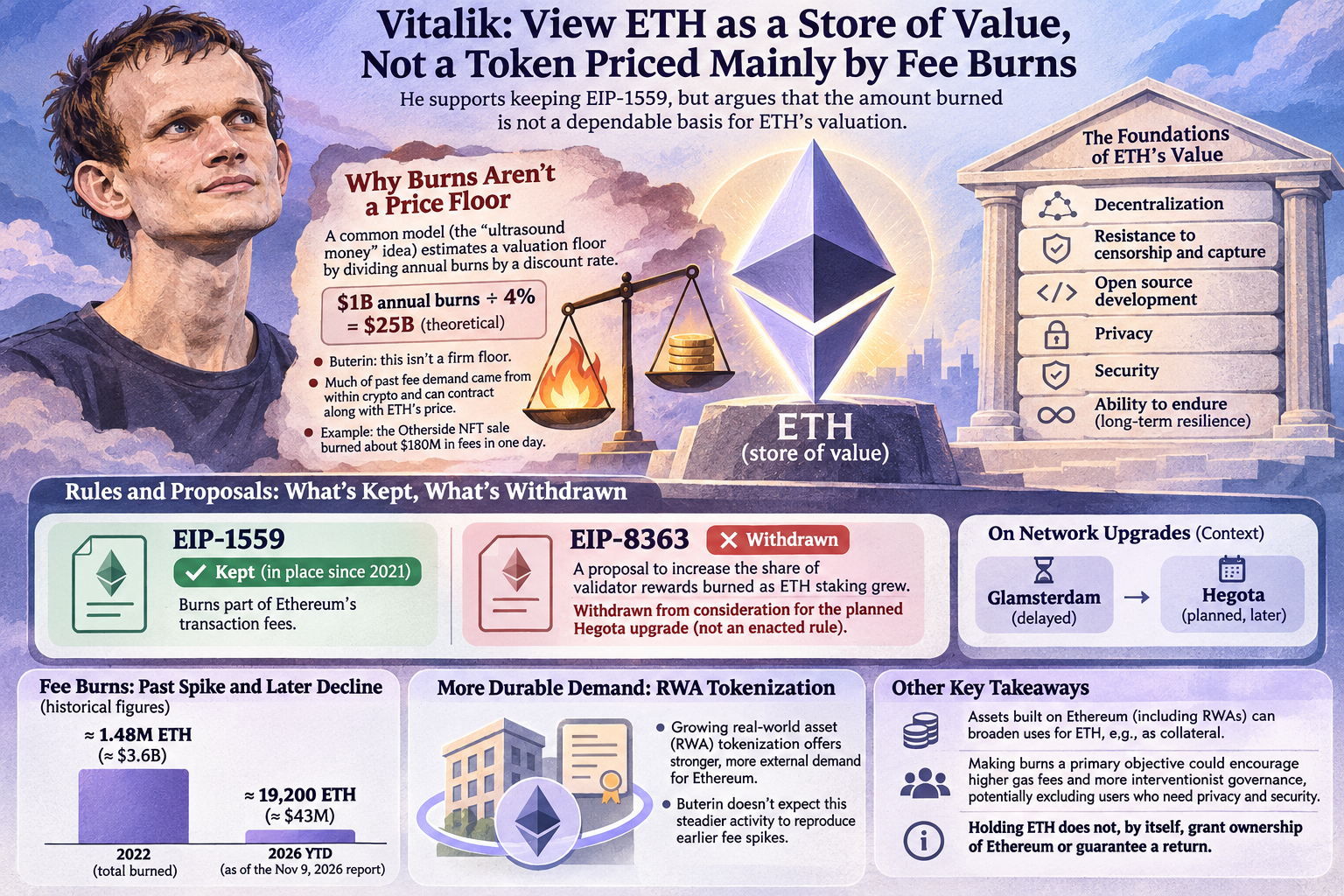
Vitalik Buterin argued in a post on Sunday evening, November 8, that it makes more sense to discuss ETH as a store of value than as a token valued primarily through transaction-fee burns. He supported retaining EIP-1559, the mechanism introduced in 2021 that burns part of Ethereum’s transaction fees. His objection was to treating the amount burned as a dependable basis for ETH’s valuation—even if burns offset only part of new ETH issuance.
Why a burn is not a price floor
Buterin examined a model associated with the “ultrasound money” narrative: divide the annual value of tokens burned by a discount rate to estimate a valuation floor. At $1 billion in annual burns and a 4% discount rate, the model produces $25 billion. He argued that this is not a firm floor because much of the fee demand behind past burns came from within crypto and could contract along with ETH’s price.
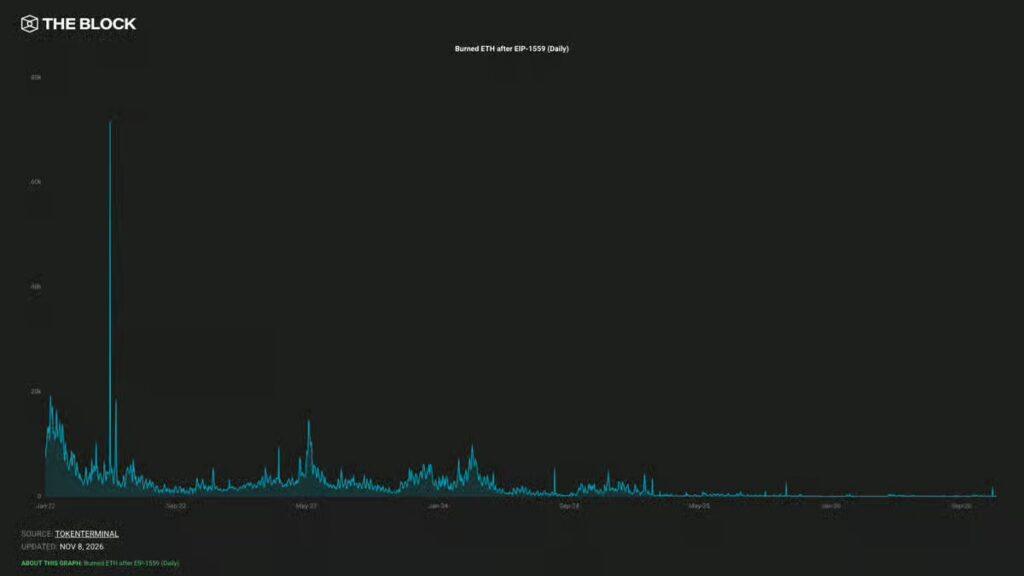
As an example, he pointed to an NFT sale that generated $180 million in fees burned in one day. The article identifies it as Yuga Labs’ Otherside land sale. According to The Block data cited in the original report, Ethereum burned about 1.48 million ETH, worth roughly $3.6 billion, during 2022. By the November 9, 2026, report, the year-to-date total was about 19,200 ETH, worth $43 million. Those are historical figures, not a forecast of future supply.
Buterin said growing real-world asset tokenization offers a stronger source of demand outside crypto, but he did not expect such steadier activity to reproduce earlier fee spikes.
What he wants ETH holders to consider
Buterin instead emphasized Ethereum’s decentralization, resistance to censorship and capture, open-source development, privacy, security and ability to endure. He said assets built on Ethereum, including tokenized real-world assets, can broaden uses for ETH—for example, as collateral. Holding ETH does not, by itself, grant ownership of Ethereum or guarantee a return.
He also argued that making burns a primary objective could encourage higher gas fees and more interventionist governance, potentially excluding users who need privacy and security. His comparison with a large company was a hypothetical, not a funding proposal: using an AI-generated estimate of L’Oréal’s research spending, he said an equivalent approach for Ethereum could require roughly 700,000 ETH a year in protocol funding and cut validator rewards by two-thirds.
The discussion followed the withdrawal of EIP-8363 from consideration for the planned Hegota upgrade, which the report said would follow the delayed Glamsterdam hard fork. The proposal would have increased the share of validator rewards burned as ETH staking grew. Its withdrawal matters here: that proposed change was not an enacted rule.
Source: panewslab.com (originally published 2026-11-09 16:05 UTC+8)