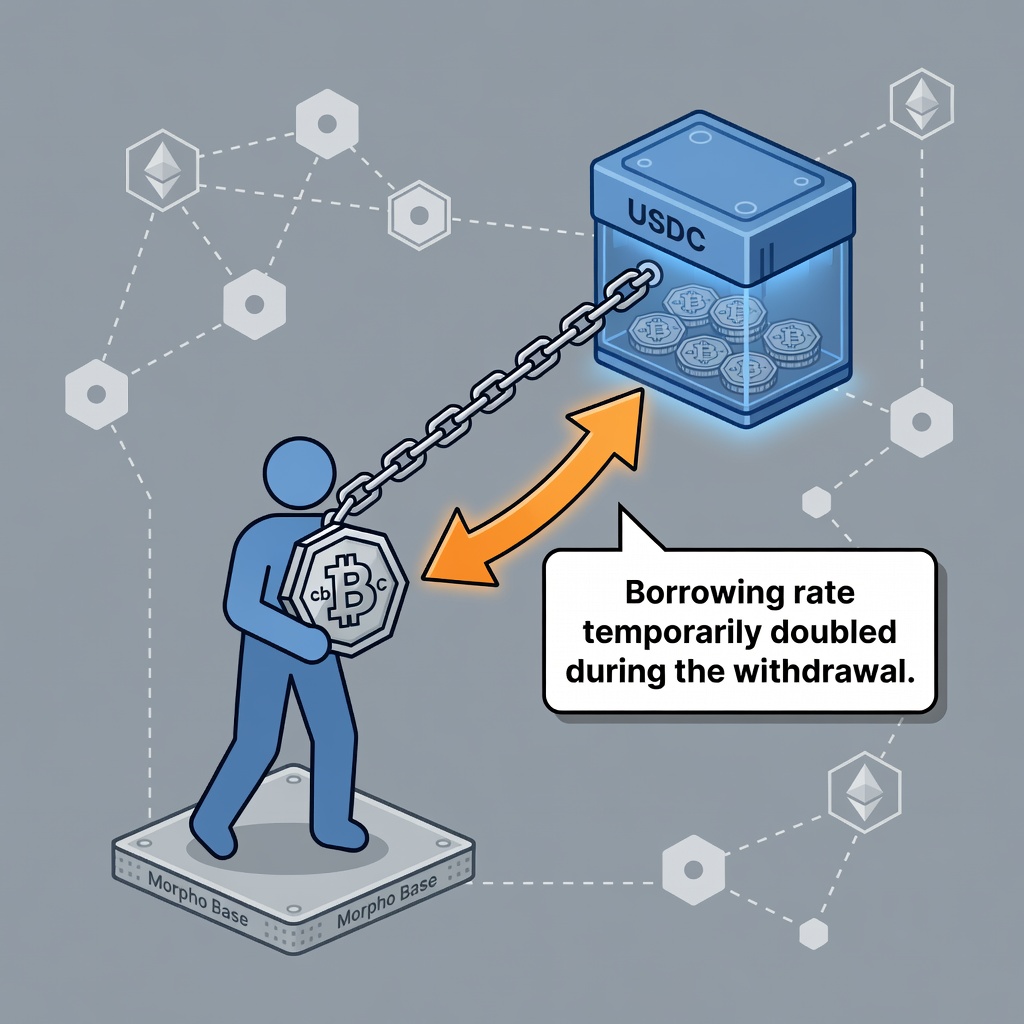
November 27, 2026, 08:10 EST — Spark says it returned $408 million to Sky in under 24 hours to replenish the stablecoin reserve that lets USDS holders swap into USDC. One lending vault on Base supplied most of the funds. During the withdrawal, the rate borrowers paid to borrow USDC against tokenized Bitcoin on that network temporarily doubled.
Why Sky needed USDC
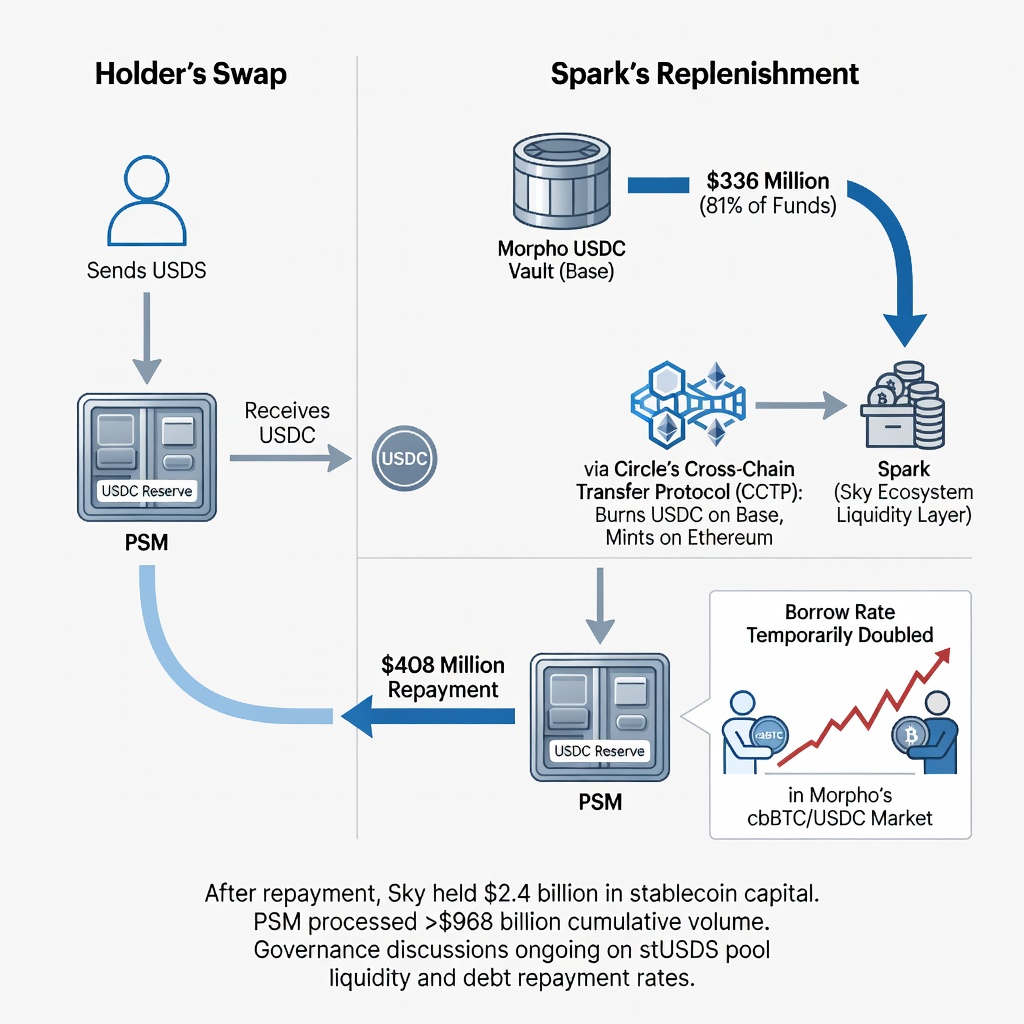
Sky’s Peg Stability Module keeps USDC, Circle’s dollar stablecoin, on hand so USDS holders can exchange their tokens at a steady rate. Outflows totaled approximately $1.9 billion, mostly as holders redeemed USDS or swapped it for USDC. Those exchanges drew down the module’s reserve.
Spark lends idle stablecoins from the Sky ecosystem across decentralized lending markets. To refill the reserve, it had to withdraw funds it had deployed. According to The Defiant, Spark freed up $416.1 million in total and repaid $408 million to Sky. It pulled $67.2 million on November 18 and $339.2 million on November 19. The automated operation involved 316 transactions across Base and Ethereum.
How the withdrawal affected borrowers on Base
A Morpho USDC lending vault on Base supplied roughly $336 million, or about 81% of the funds Spark freed up. Spark moved that USDC to Ethereum using Circle’s Cross-Chain Transfer Protocol. The protocol burns USDC on Base and creates the same amount on Ethereum, so Spark did not need a wrapped token or a third-party pool of funds to make the transfer.
For borrowers in Morpho’s cbBTC/USDC market on Base, the change was in the cost of the loan. They had pledged cbBTC, a tokenized form of Bitcoin, as collateral to borrow USDC. It was their borrowing rate that temporarily doubled during the withdrawal, not the amount of USDC they owed.
After the repayment, Sky held $2.4 billion in stablecoin capital. Its Peg Stability Module had processed more than $968 billion in cumulative volume. The repayment refilled the reserve, but separate governance discussions remained open over a shortage of available funds in a stUSDS lending pool and concerns about debt repayment rates.