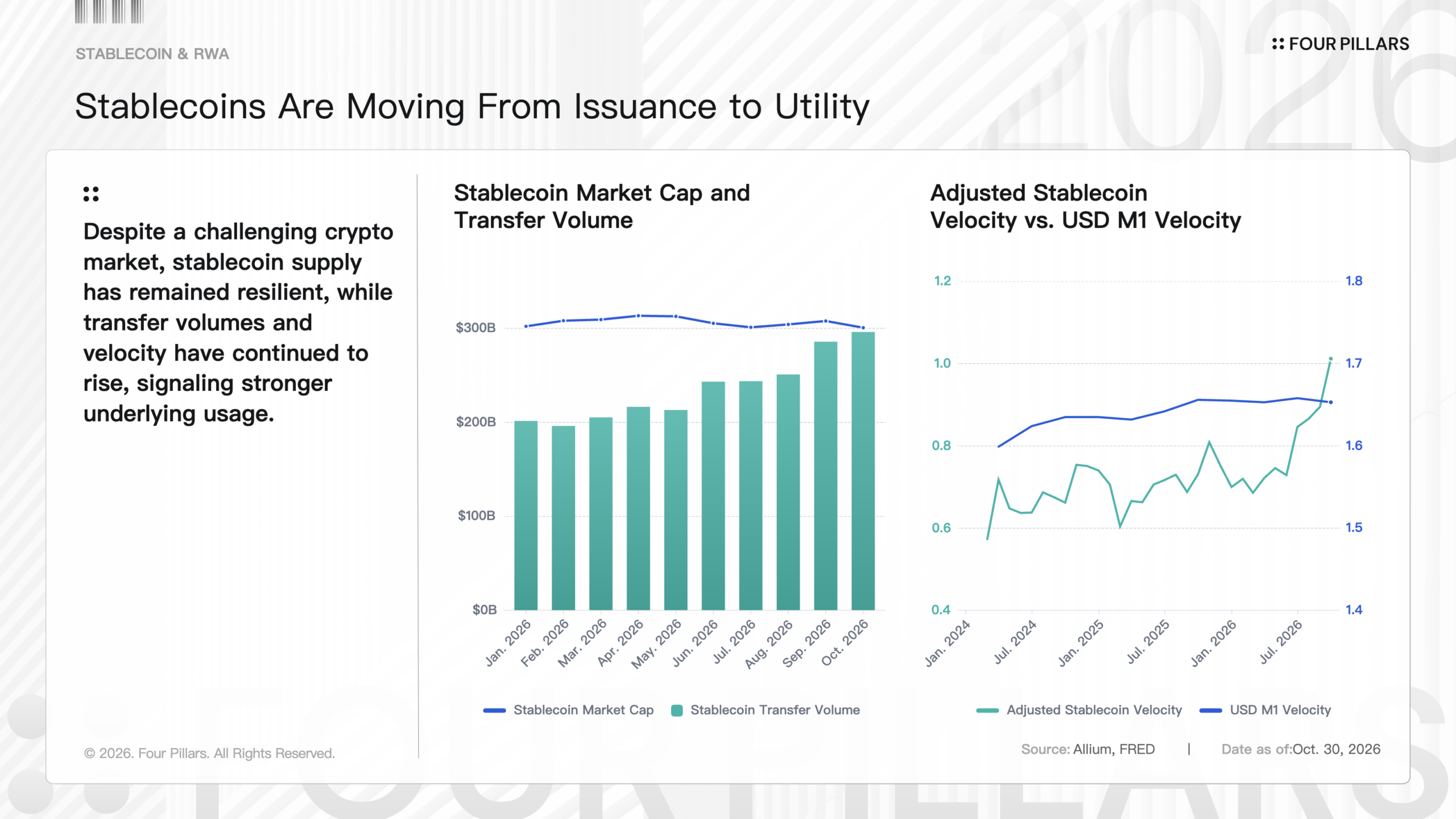
Stablecoin payments grew 45% to $482 billion by September 2026, even as the supply of stablecoins stayed near $300 billion and ended the third quarter at about $305 billion. In its State of Digital Assets 2026 report, Four Pillars found that the existing supply was circulating more actively: payment activity could grow without issuers having to create proportionally more tokens.
Four Pillars also reported that tokenized assets had surpassed $120 billion. But the value issued tells readers little about what a holder can do. A Treasury fund token can serve as collateral, a stock-linked token can provide price exposure without direct share ownership, and some assets recorded on a blockchain cannot move between wallets at all.
Stablecoins: how balances reach the checkout
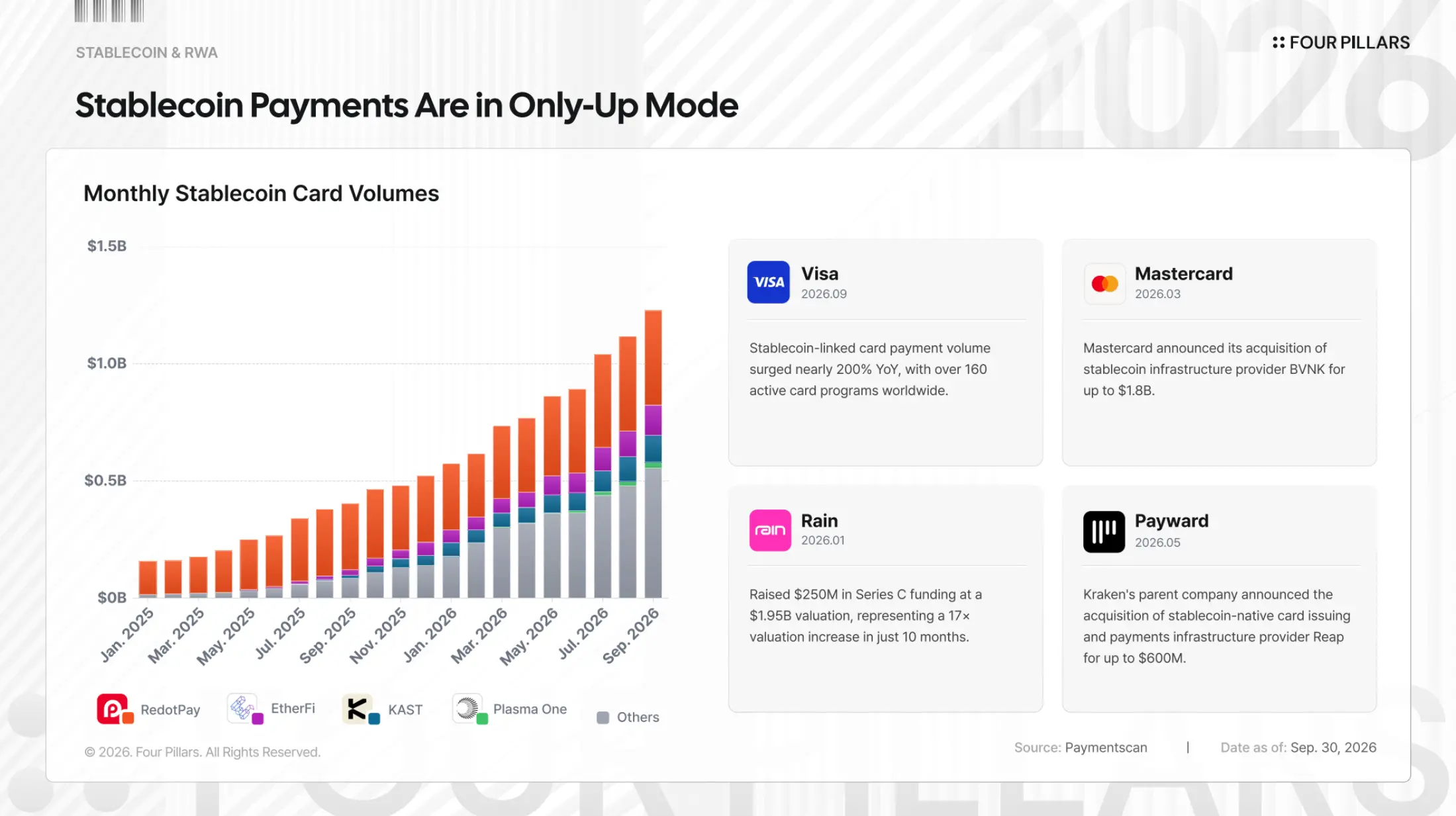
A stablecoin-linked card lets a customer spend against an onchain balance. Monthly card transaction volume topped $1 billion by the third quarter, according to Paymentscan. Visa reported nearly 200% year-over-year growth across more than 160 stablecoin-linked card programs worldwide. Visa and Mastercard were both expanding their payment infrastructure; Mastercard acquired BVNK, and Payward acquired Reap.
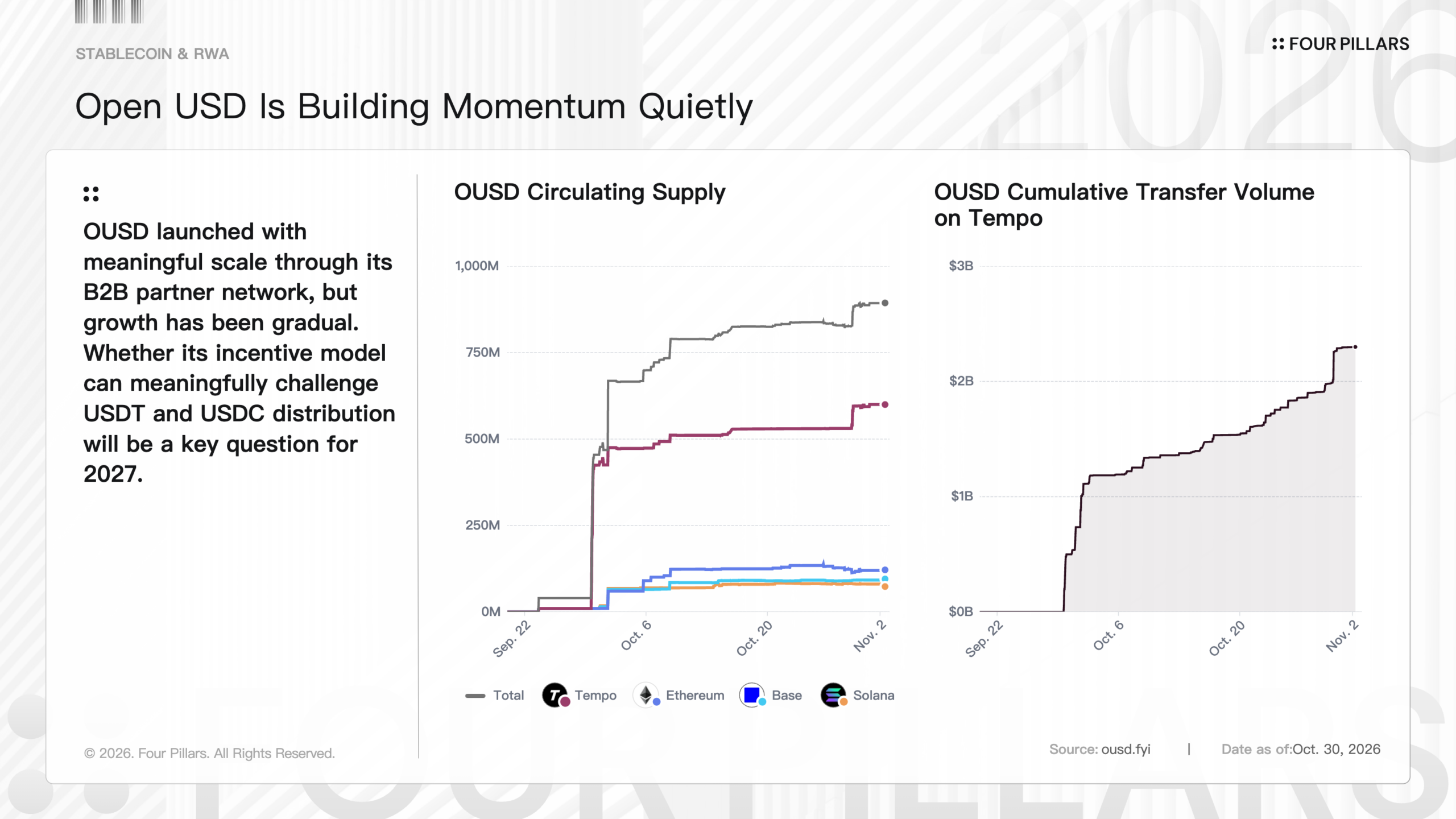
Open USD (OUSD) took a different route to customers: it launched through a network of more than 200 banks, fintech companies, payment providers and crypto platforms, including Coinbase, Mastercard, Shopify, Stripe and Visa. By October 30, circulating supply was close to $900 million. Partners had committed more than $1 billion in initial liquidity, a separate figure from the amount actually in circulation.
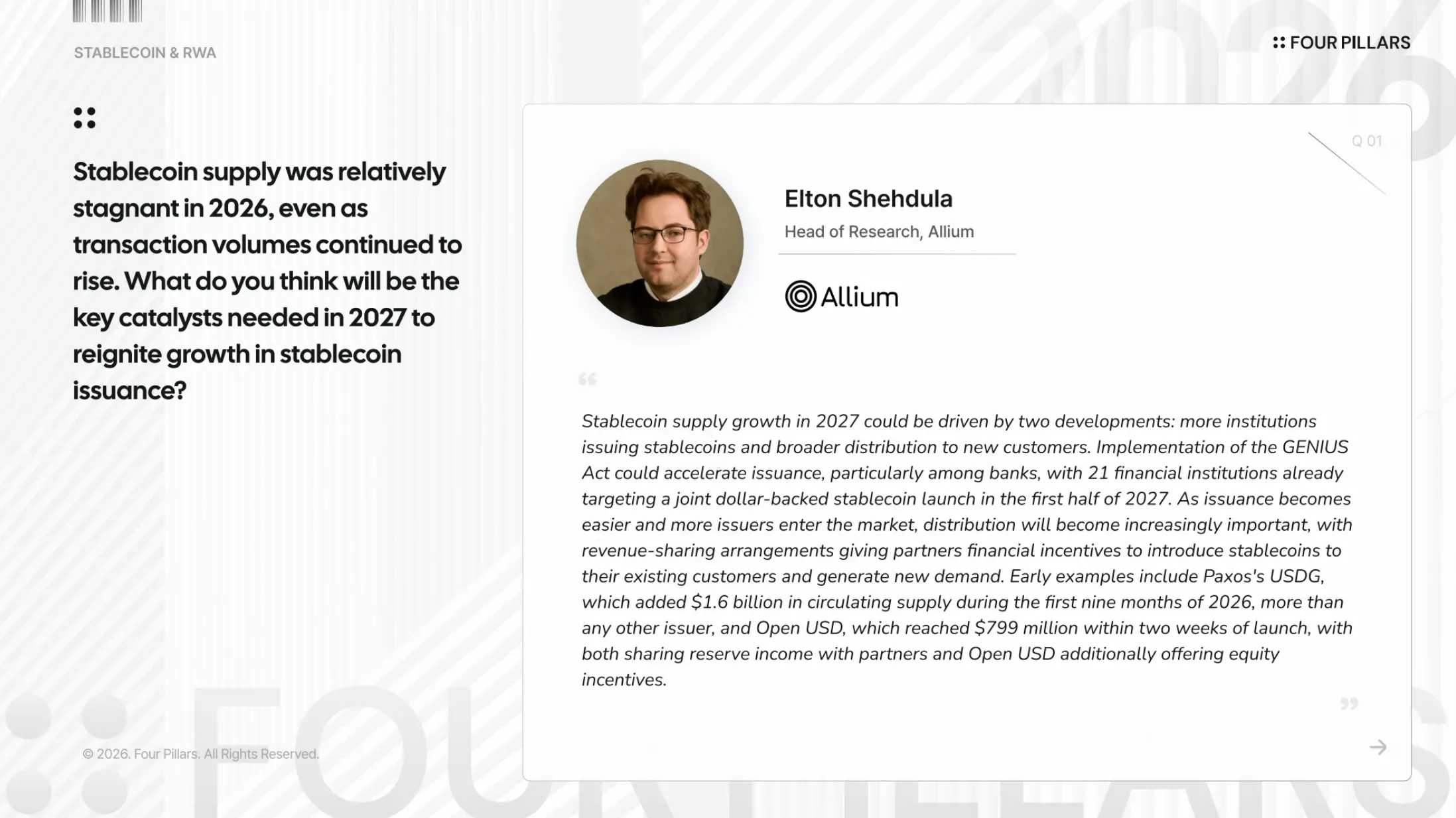
Elton Shehdula, Allium’s head of research, said sharing income from reserves gave partners a reason to distribute stablecoins to existing customers. He cited Paxos’s USDG, which added $1.6 billion to circulation in the first nine months of 2026, and Open USD, which reached $799 million within two weeks of launch and also offered partners equity incentives. Those incentives were for distributors, not an ownership right attached to holding the stablecoin.
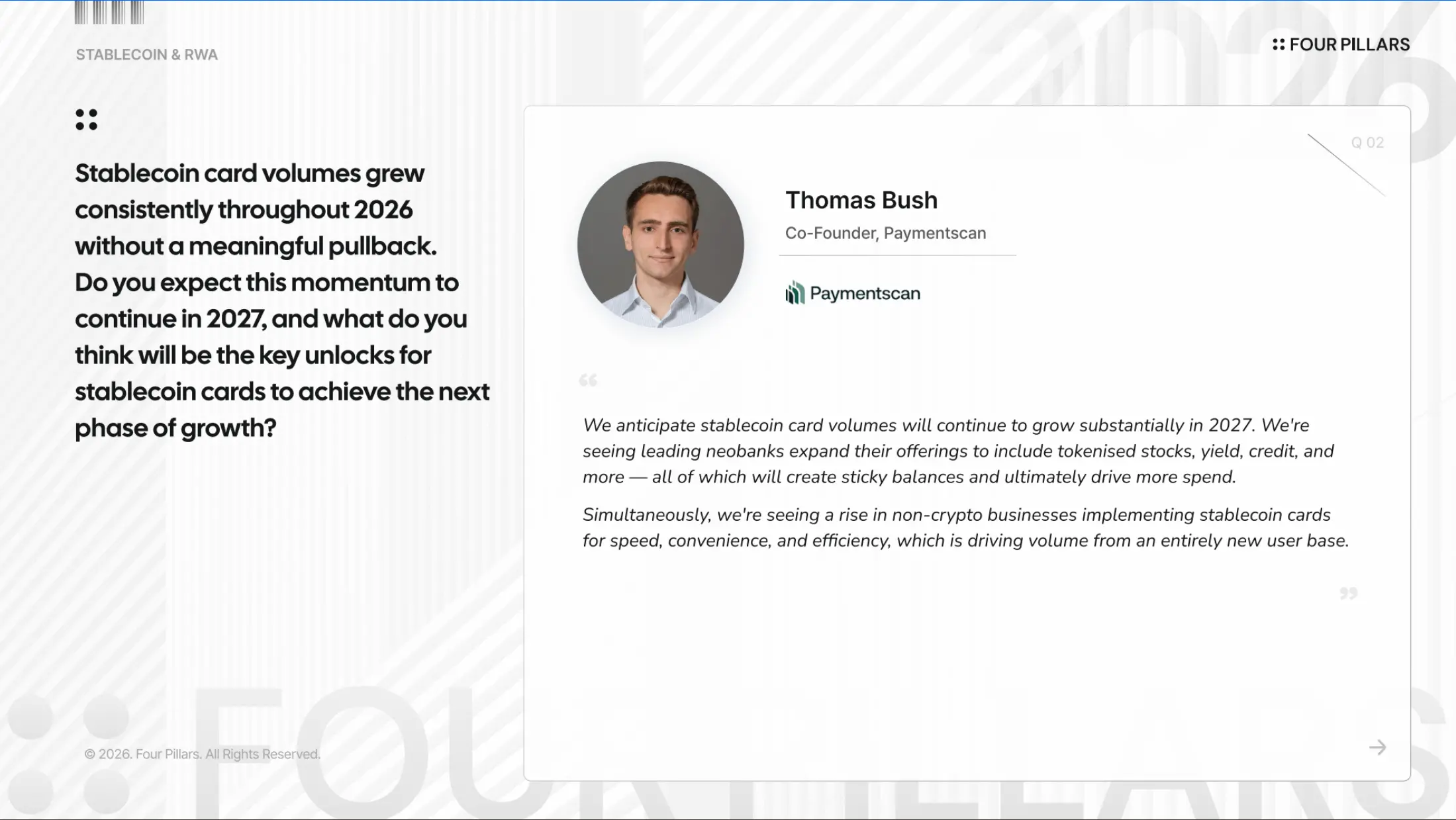
Looking to 2027, Shehdula said implementation of the GENIUS Act could encourage bank issuance. A group of 21 financial institutions planned a joint dollar-backed stablecoin for the first half of 2027; it had not yet launched. Paymentscan co-founder Thomas Bush expected card spending to keep growing as digital banks added services and more businesses outside crypto adopted the cards.
Treasuries: a fund token can also secure a position
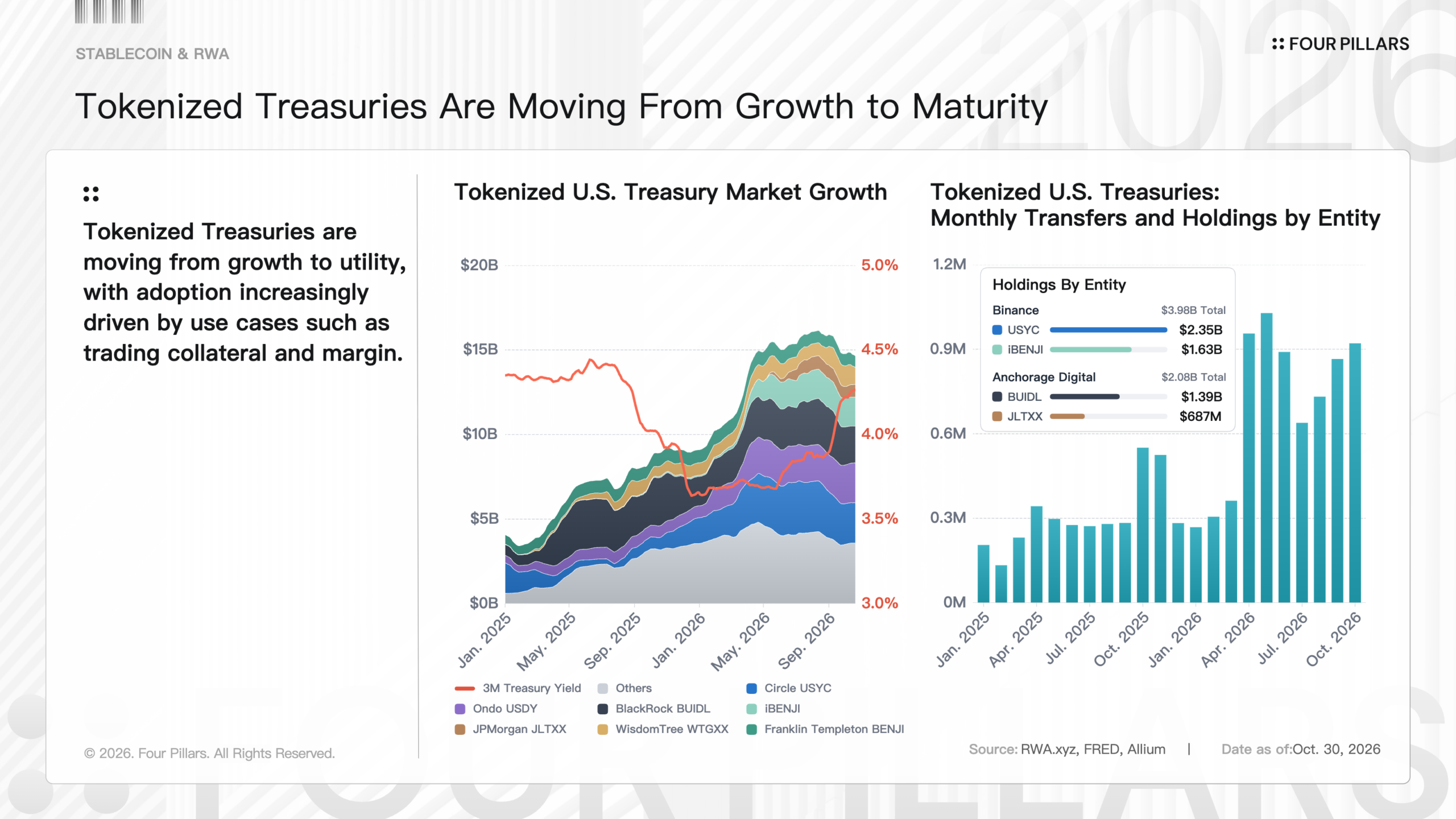
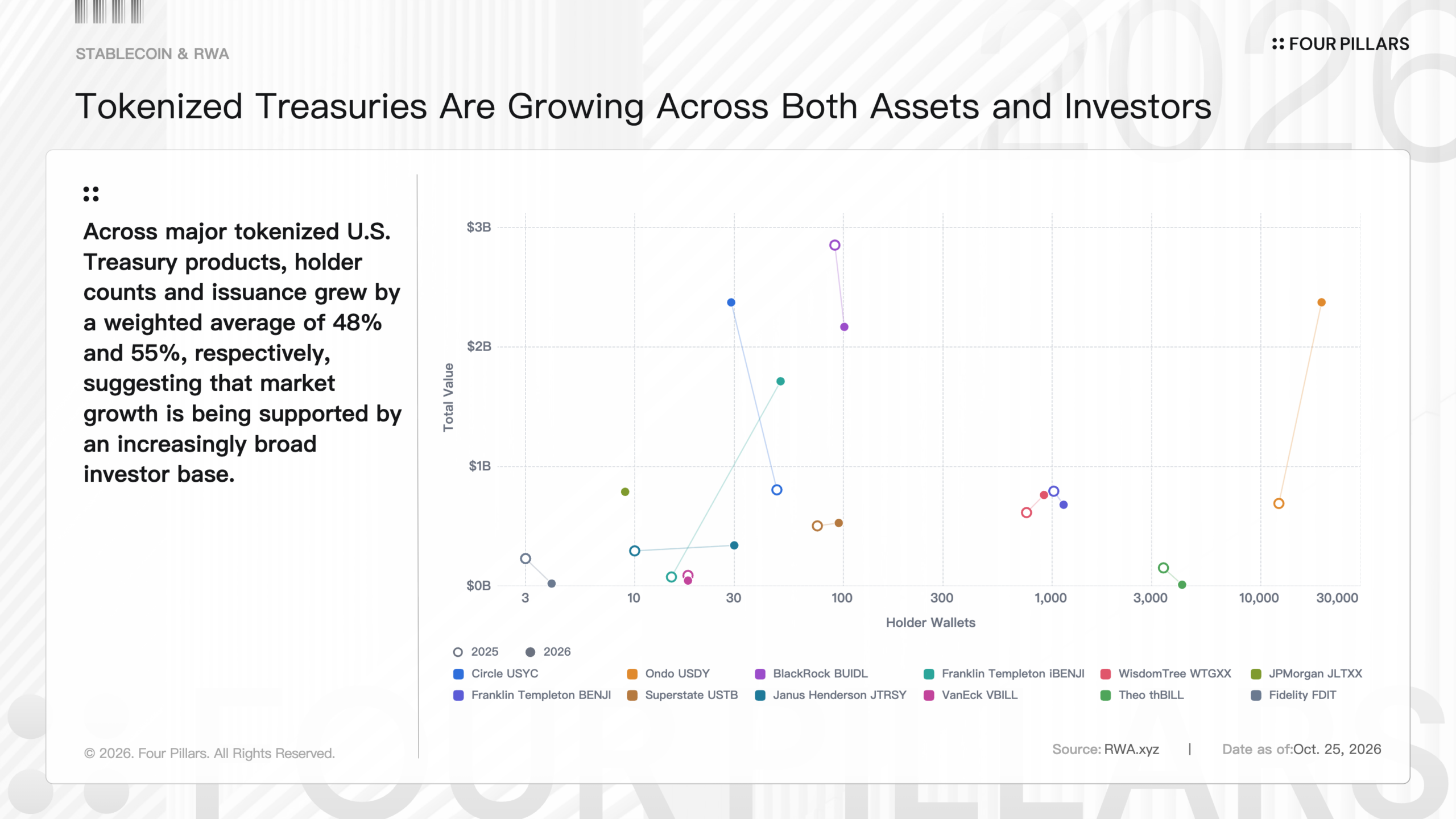
The tokenized U.S. Treasury market grew from about $3 billion in early 2025 to a peak near $16 billion in 2026, then settled around $14 billion to $15 billion. Transfers kept rising, from roughly 200,000 a month in early 2025 to about 900,000 in October 2026. Among the major products examined as of October 25, issuance rose 55% on a weighted-average basis and holder counts increased 48%.
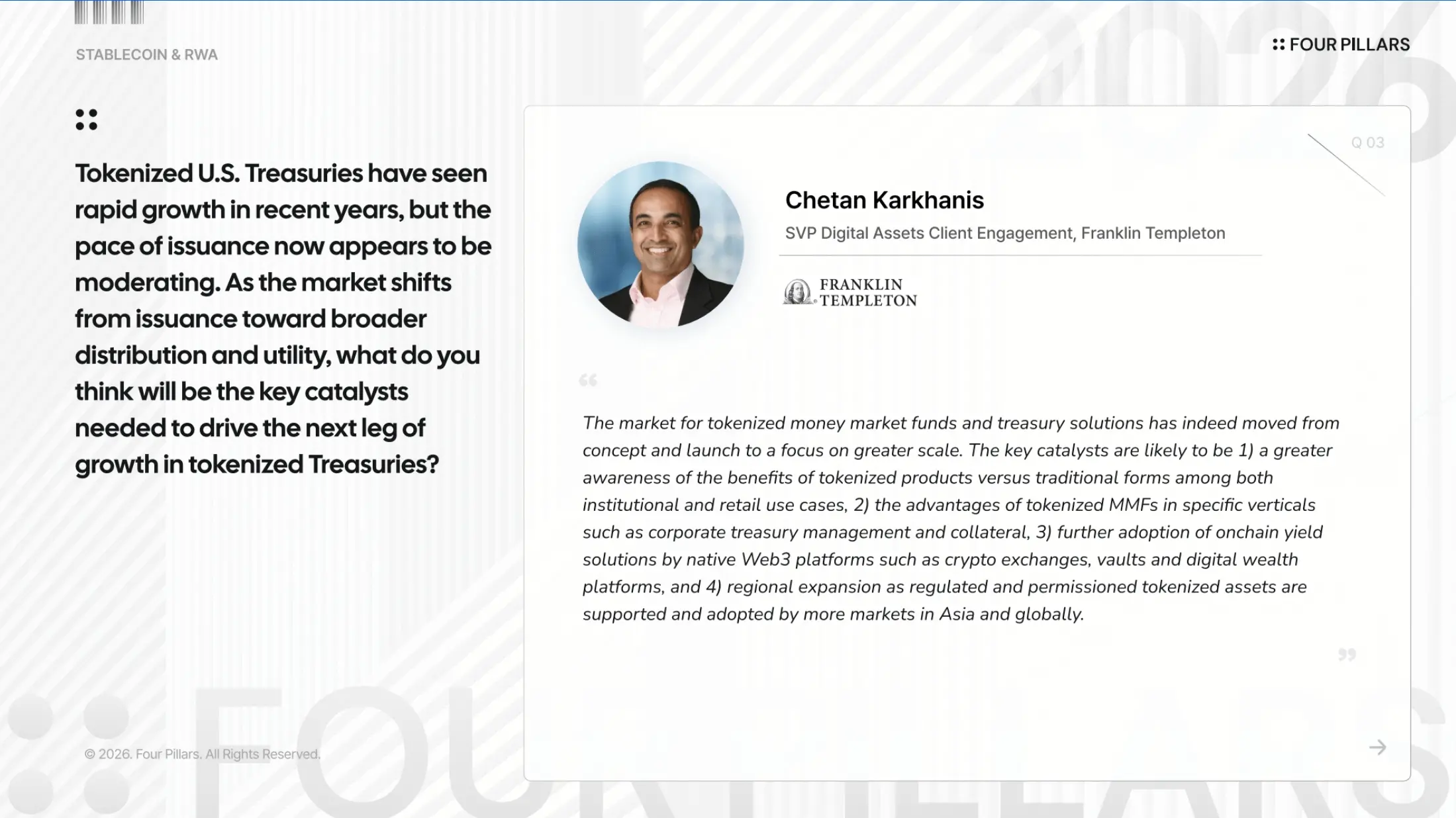
One practical use was collateral: Binance allowed institutions to use tokenized Treasury products such as BUIDL to secure positions without posting the assets directly on the exchange. Franklin Templeton’s Chetan Karkhanis identified collateral and corporate cash management as potential sources of demand, alongside wider distribution through exchanges and digital wealth platforms.
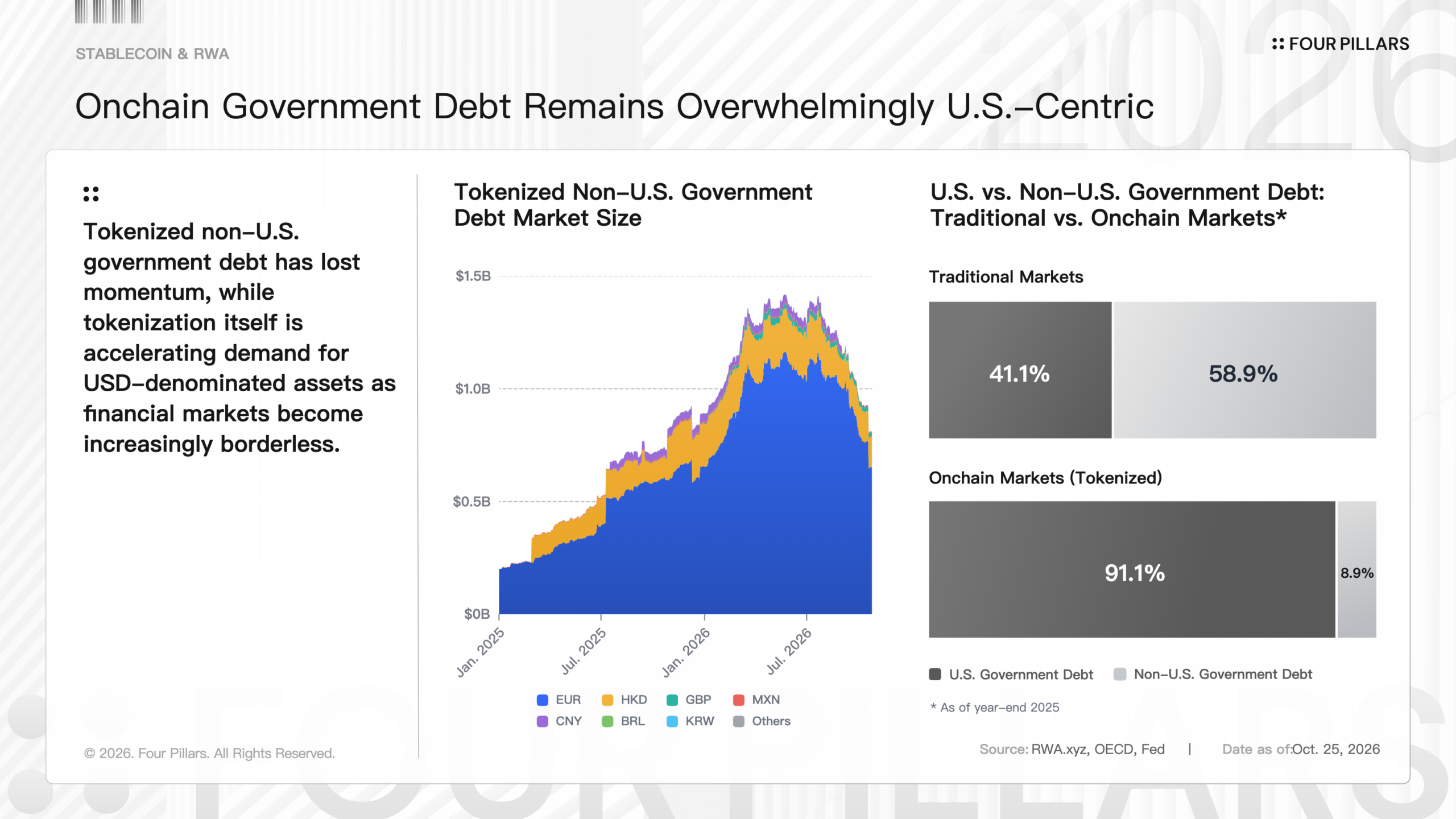
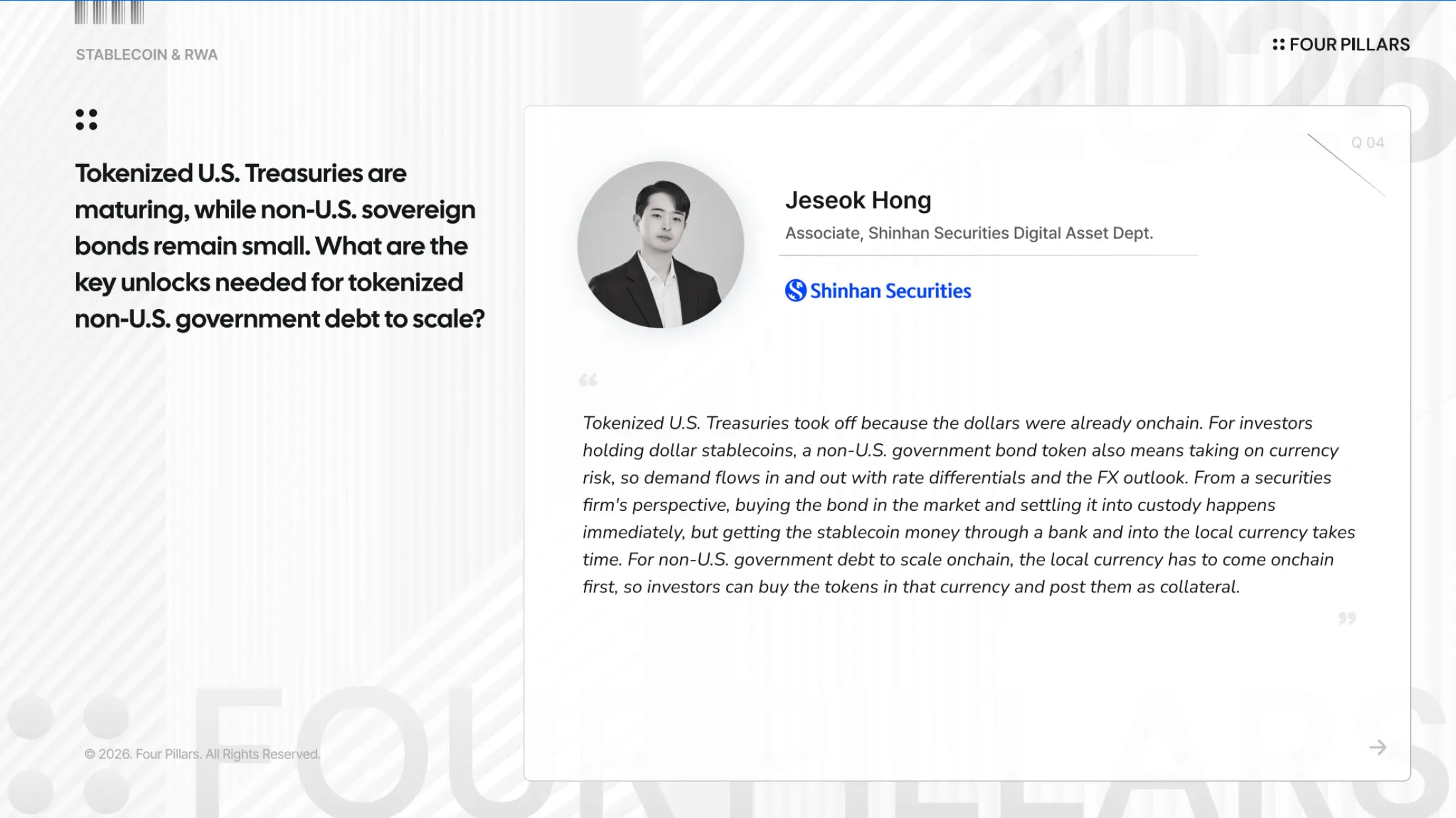
The market remained much narrower geographically than the government bond market as a whole. At December 31, 2025, U.S. debt accounted for 91.1% of tokenized government debt but only 41.1% of government debt in traditional markets. Non-U.S. debt accounted for 8.9% and 58.9%, respectively. Jeseok Hong of Shinhan Securities said a dollar-stablecoin holder buying a bond denominated in another currency faces exchange-rate risk, while converting funds through a bank takes time. In his view, bringing local currencies onchain would make those bonds easier to buy and use as collateral.
Equities: price exposure is not share ownership
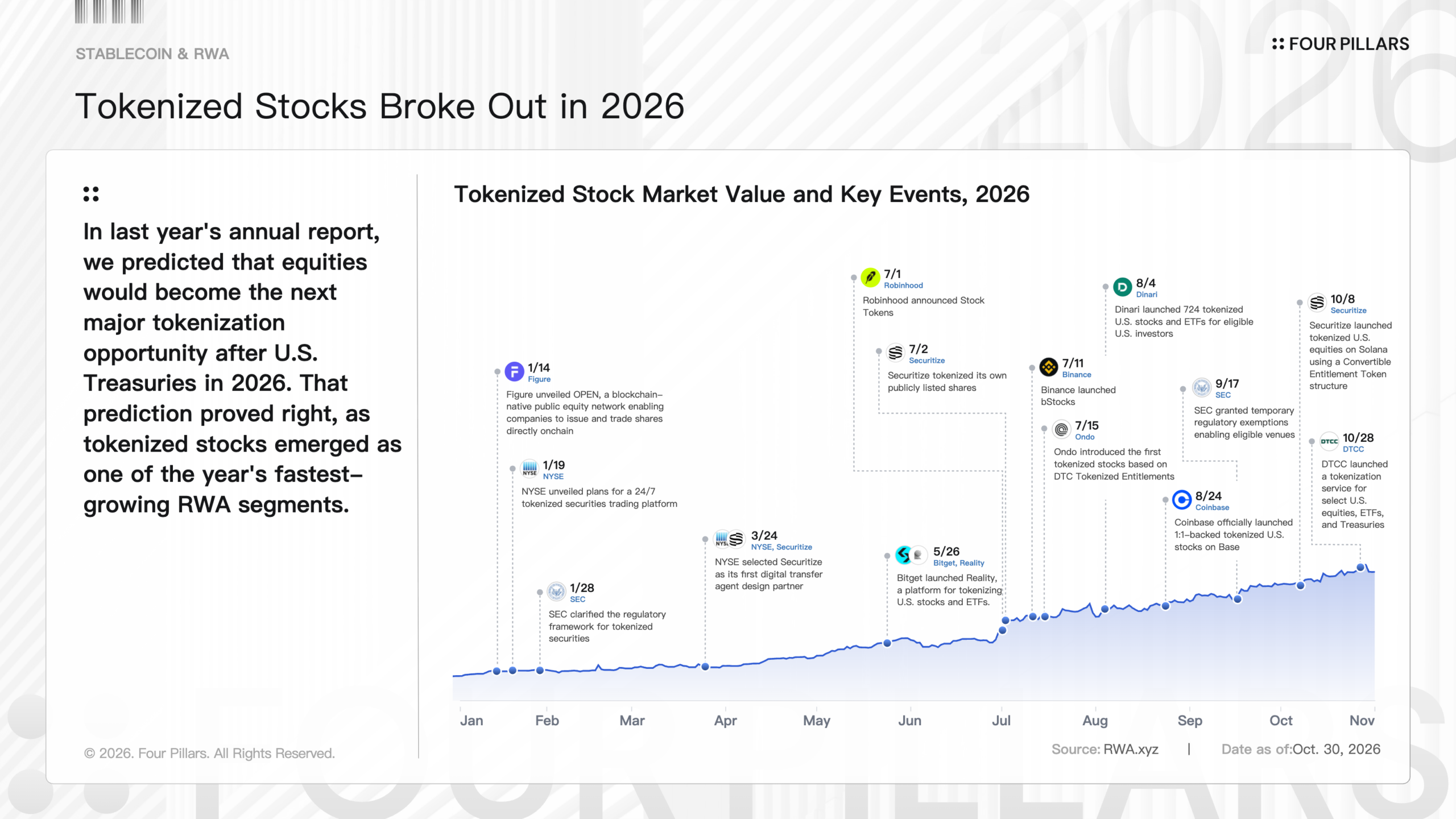
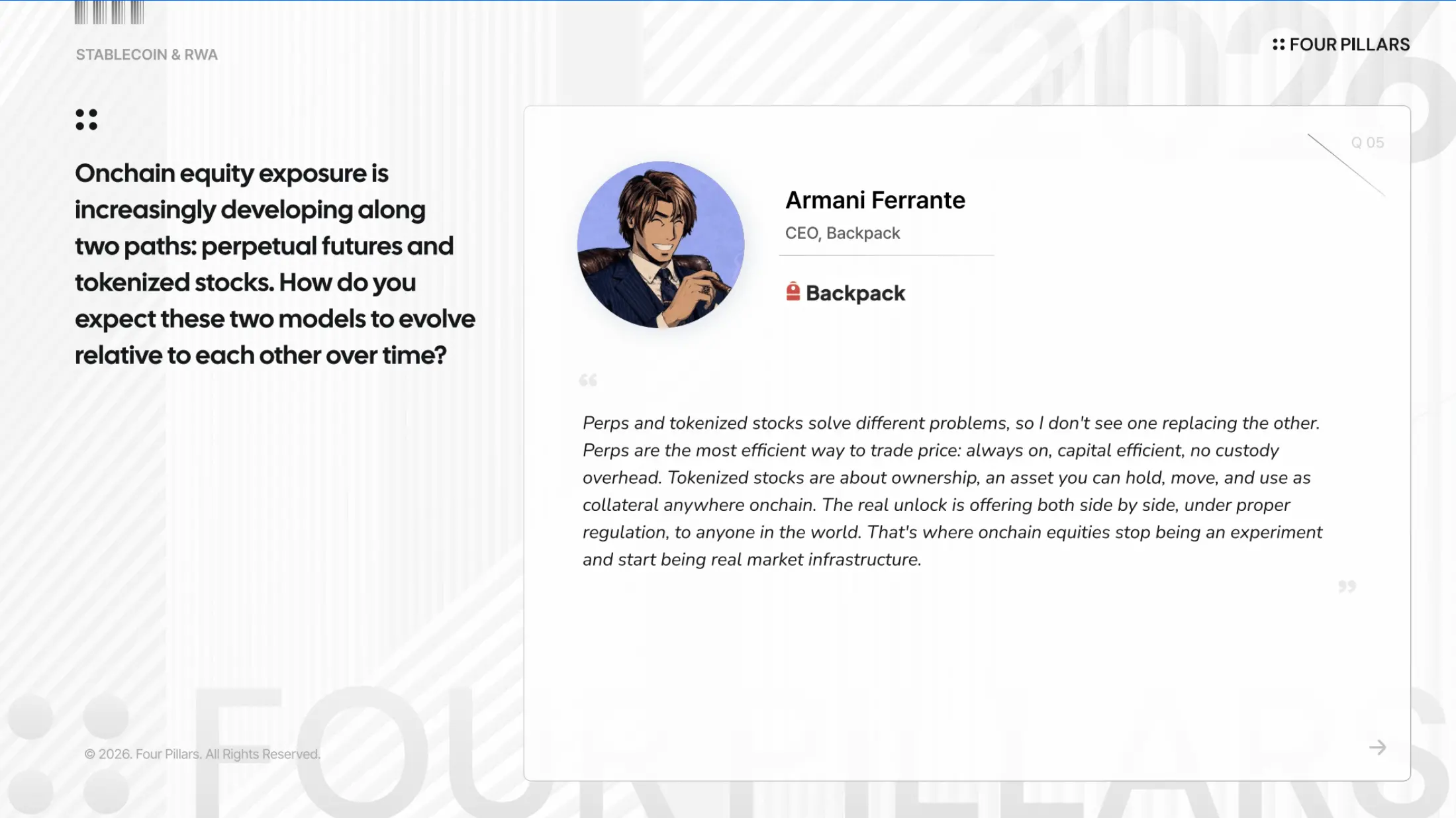
By October 30, Four Pillars counted about $3.3 billion in outstanding stock-linked securities, compared with approximately $395 million in issuer-sponsored securities. The distinction matters: a product linked to a share price does not, by that fact alone, give the holder ownership of the share. Backpack CEO Armani Ferrante drew a similar distinction between perpetual futures, contracts used to trade price movements, and tokenized shares that can be held, transferred or pledged under the applicable structure.
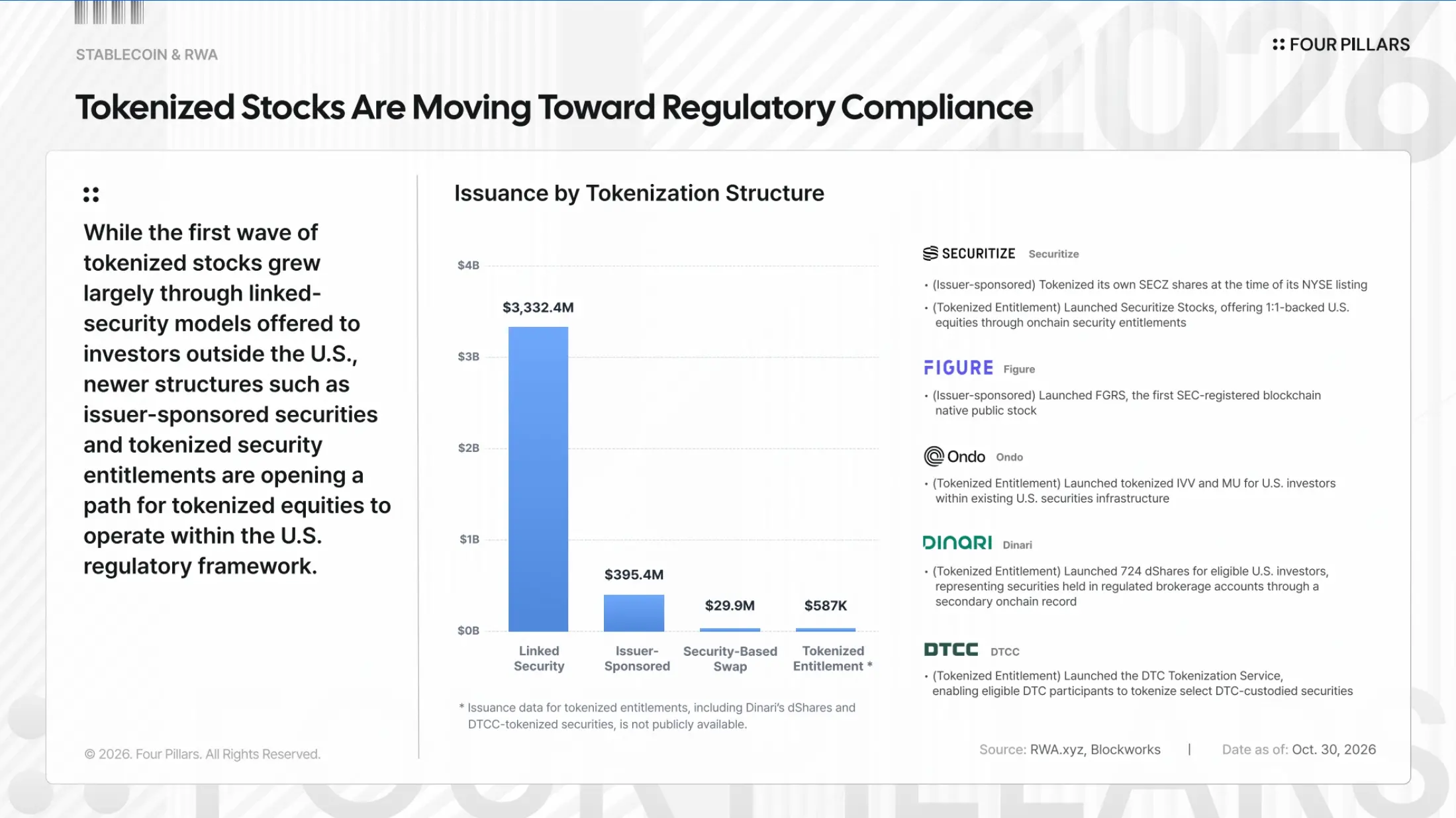

In September 2026, the U.S. Securities and Exchange Commission granted temporary relief for onchain trading in certain National Market System stocks. It was not blanket approval for tokenized equities. Figure, Securitize, Dinari, Ondo and DTCC were among the organizations introducing products designed to operate within existing U.S. securities law. Securitize’s Graham Ferguson said licenses and compliance were necessary to bring traditional equity markets onchain.
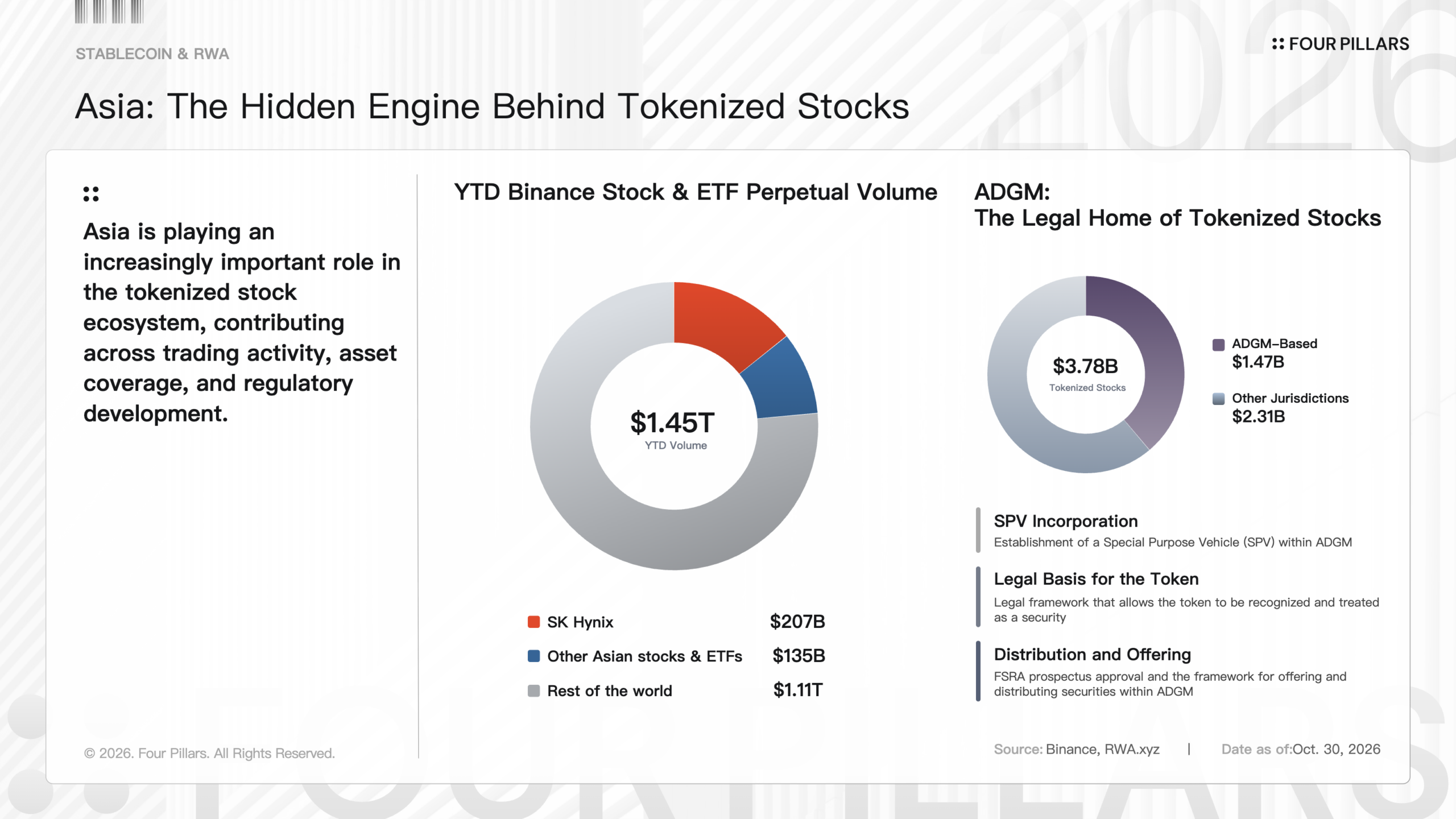
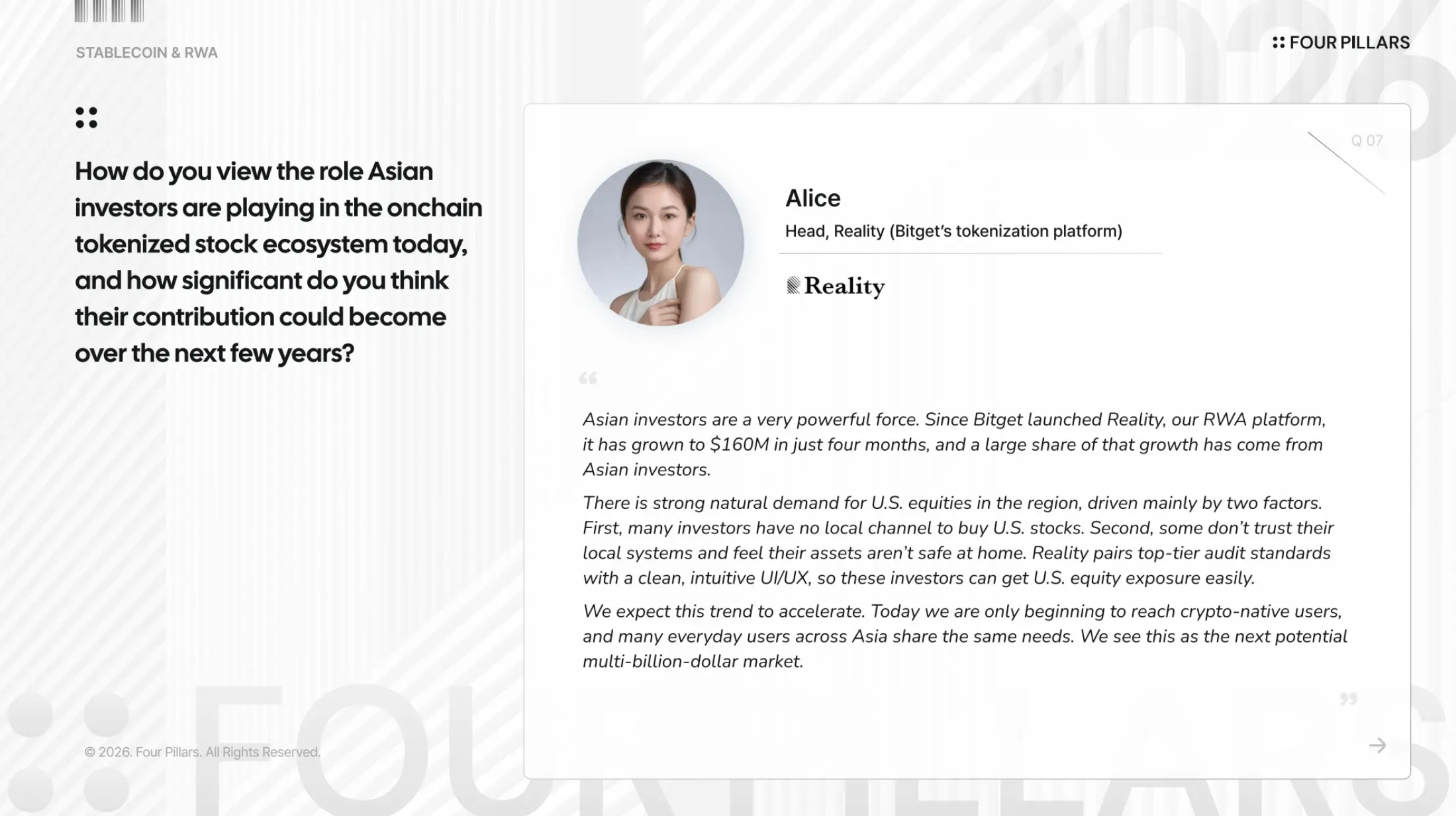
Asian markets illustrate why trading volume and the value of securities issued should be read separately. Through October 30, perpetual futures tied to Asian stocks and exchange-traded funds generated about $342 billion in year-to-date volume on Binance, including $207 billion tied to SK Hynix. That was contract turnover, not the value of shares held. Separately, $1.47 billion of the $3.78 billion in tokenized equities examined, about 39%, had been issued under Abu Dhabi Global Market structures. Alice, head of Bitget’s Reality platform, said it reached $160 million in four months and attributed a substantial part of that growth to Asian investors seeking U.S. equity exposure.
Credit, gold and property: what the numbers measure
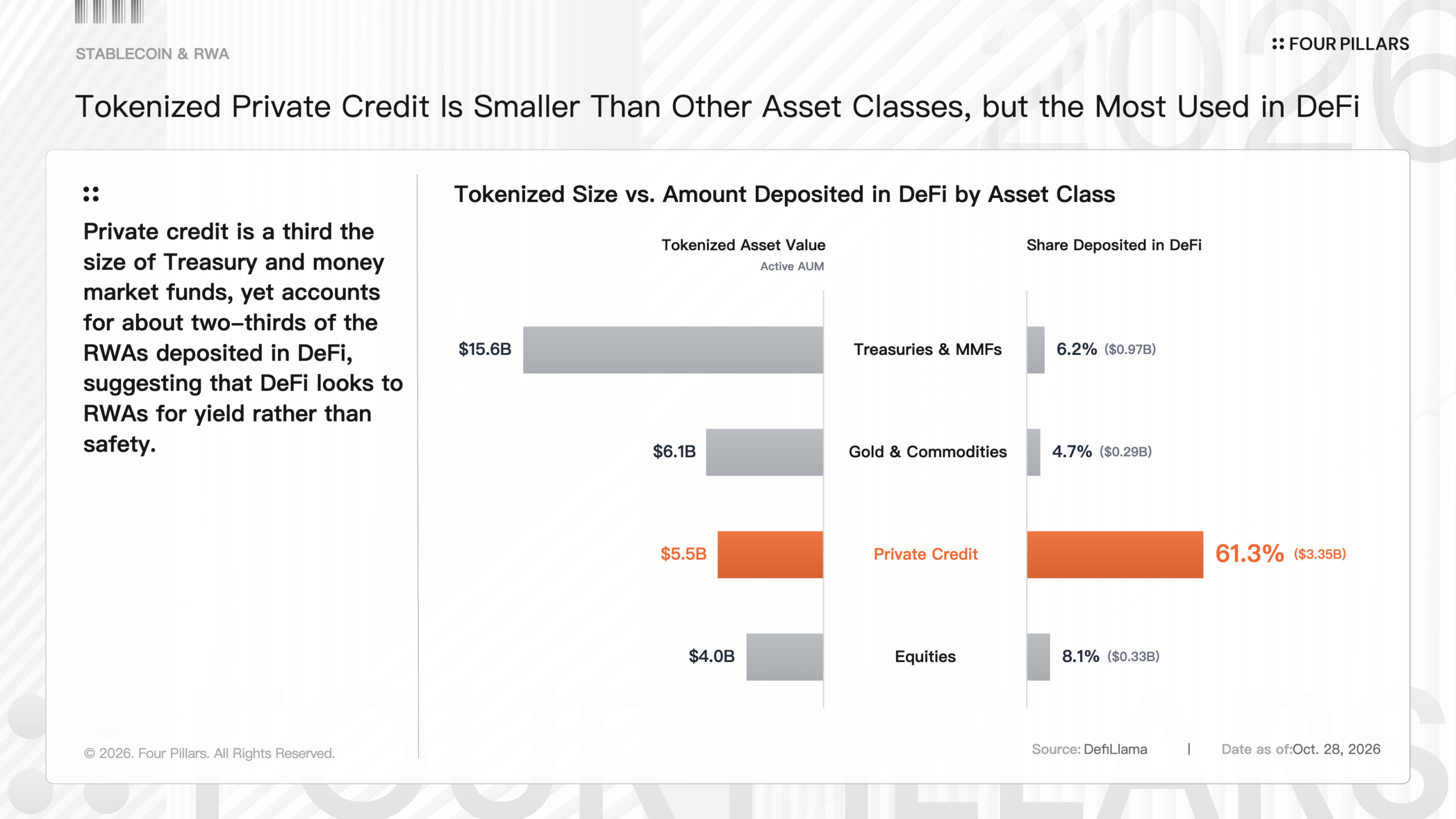
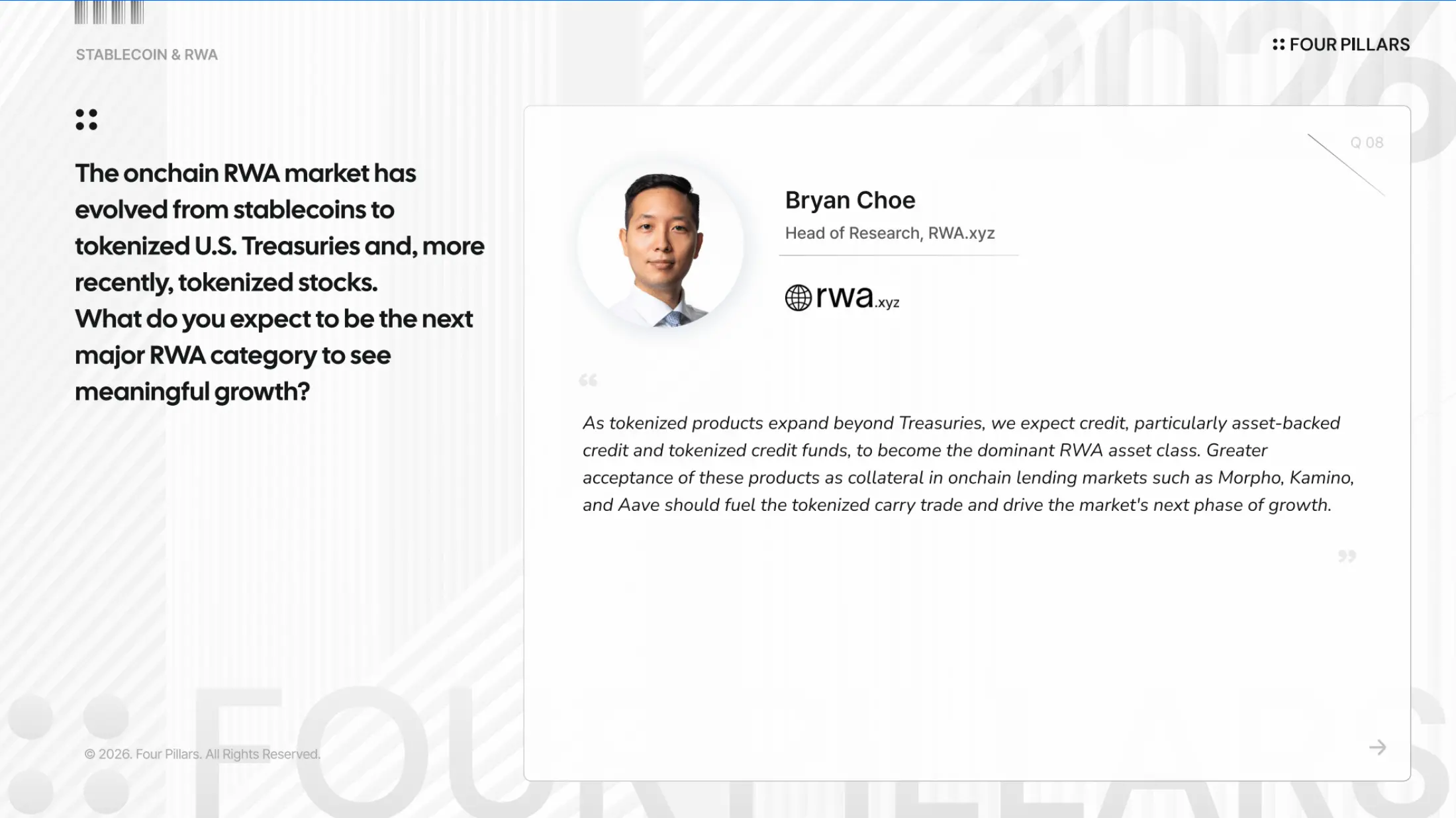
Private credit. Tokenized private credit stood at $5.5 billion on October 28, compared with $15.6 billion for Treasuries and money market funds and $6.1 billion for gold and commodities. Bryan Choe, head of research at RWA.xyz, expected asset-backed credit and tokenized credit funds to grow if lending markets such as Morpho, Kamino and Aave accepted them more widely as collateral. That was his outlook, not a measured increase in borrowing.
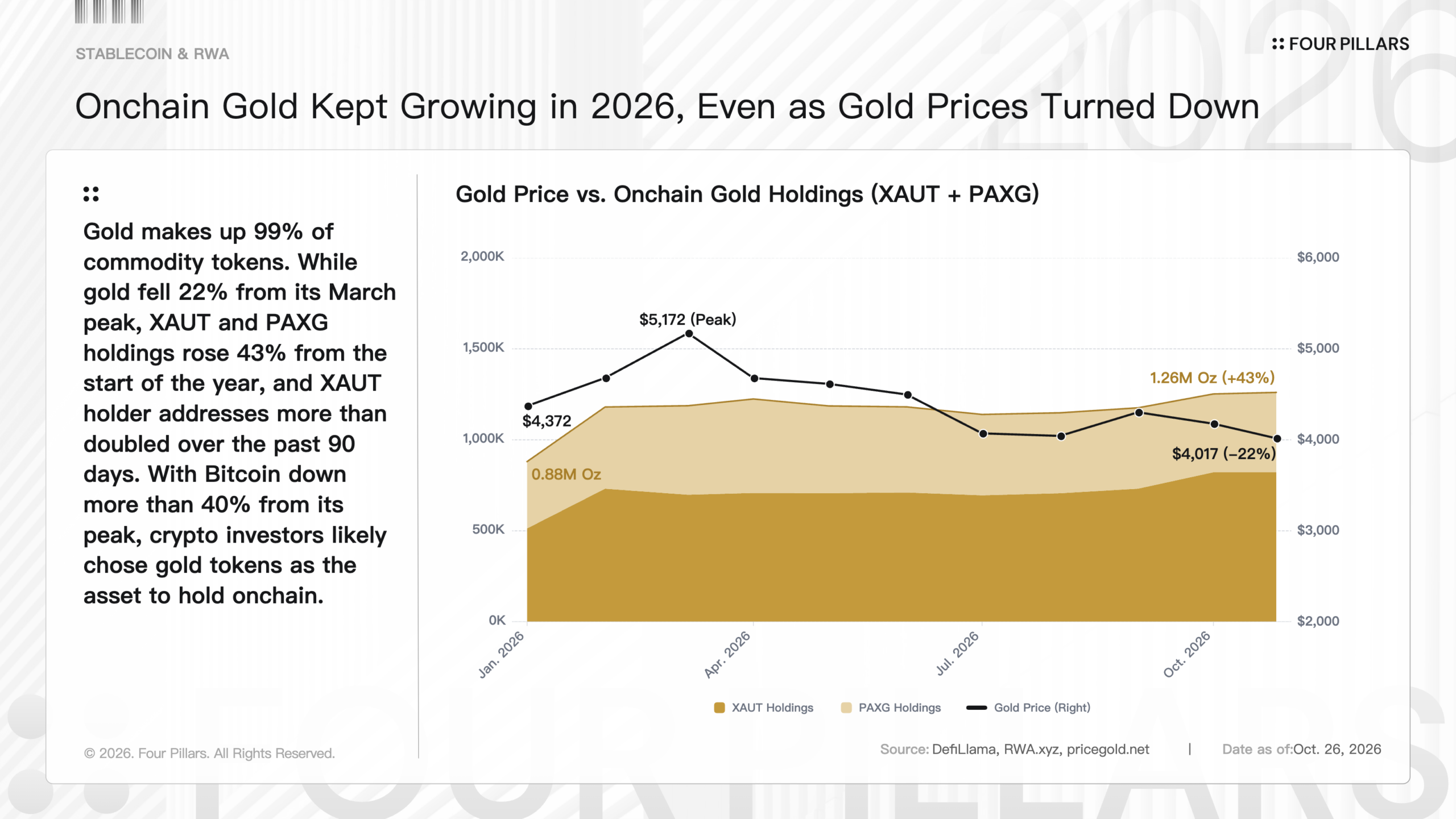
Gold. Gold accounted for 99% of tokenized commodities. Its price fell 22% from a March peak of $5,172 an ounce to $4,017 on October 26. Yet the combined gold holdings of Tether Gold (XAUT) and PAX Gold (PAXG) rose 43% from the start of the year, from 880,700 to 1,260,500 ounces. About 300,000 ounces were added in January and February, before the price peak. Measuring holdings in ounces separates the change in gold held from the change in its dollar price.
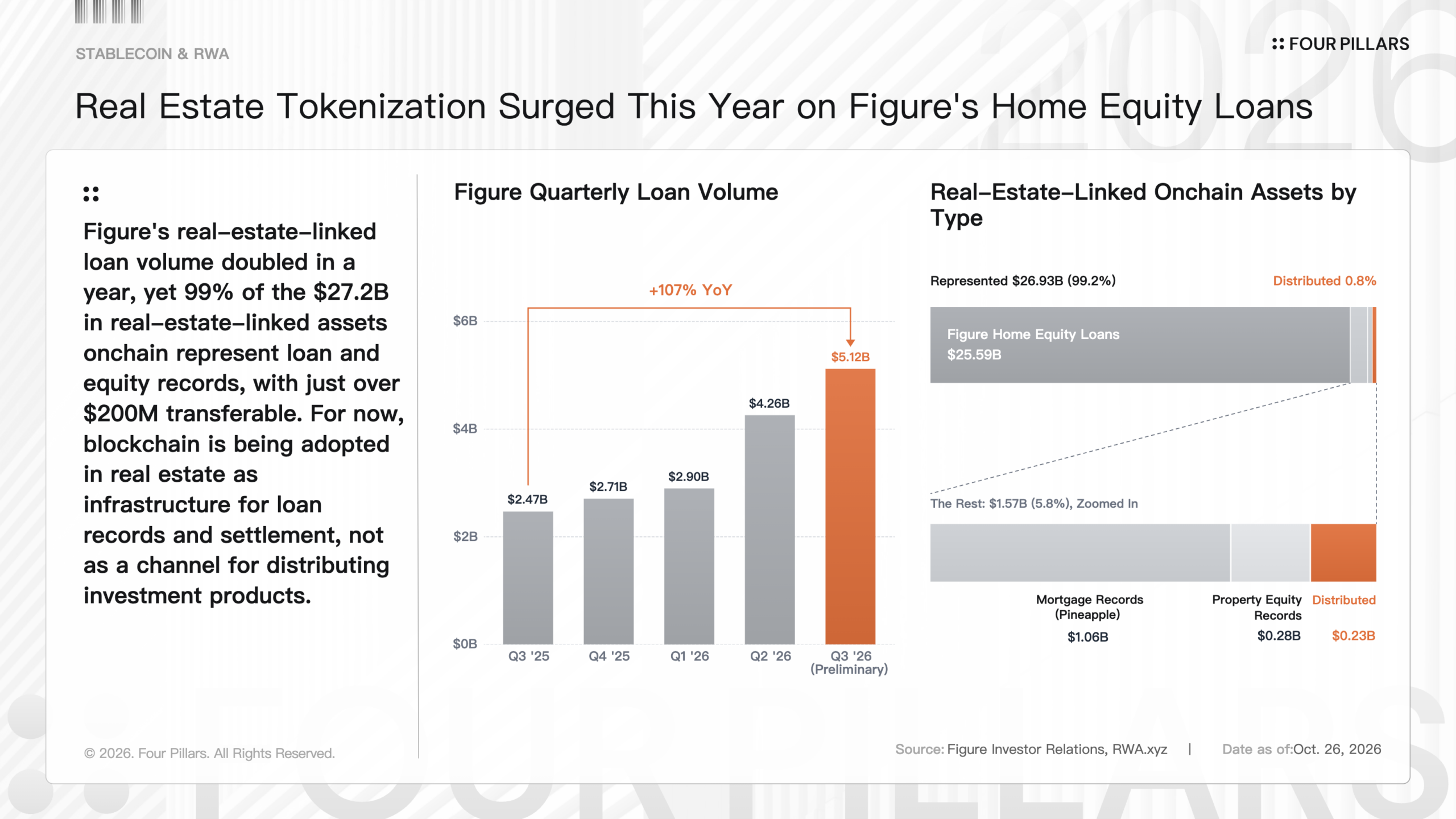
Real estate lending. Figure’s contribution came through home-equity loans, not transfers of homes. Its quarterly loan volume rose from $2.47 billion in the third quarter of 2025 to a preliminary $5.12 billion a year later. Second-quarter 2026 volume was $4.26 billion, up about 47% from the preceding quarter.
Recording an asset and transferring it are different functions
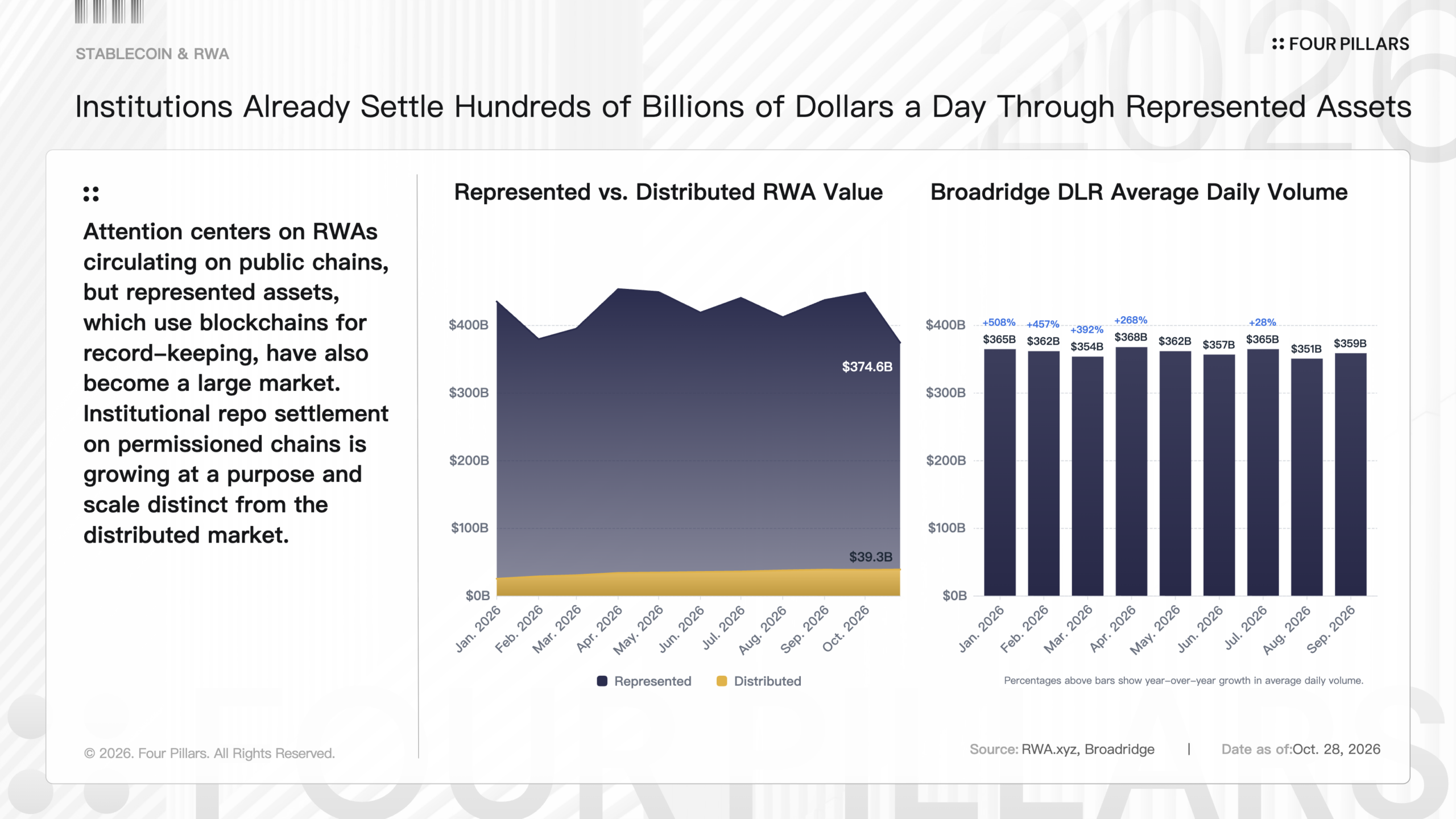
As of October 28, Four Pillars reported $374.6 billion in represented assets, for which a blockchain serves as a recordkeeping system. That was about 9.5 times the $39.3 billion in distributed assets, which can move between wallets. Distributed assets had risen from $25.6 billion at the start of 2026, while represented assets stayed in a range of $370 billion to $450 billion.
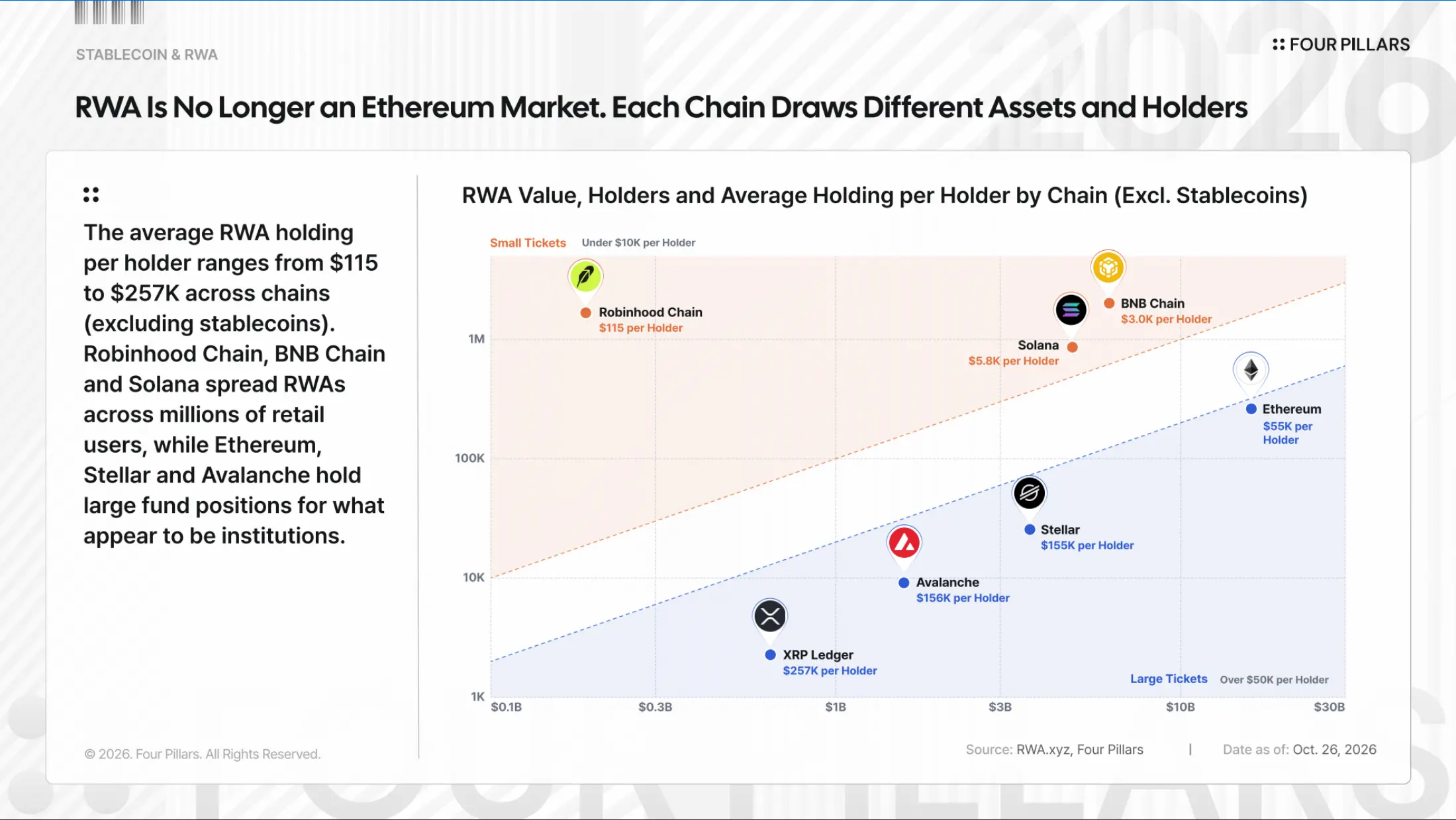
Excluding stablecoins, Ethereum led real-world asset issuance on October 26 at $15.92 billion, followed by BNB Chain at $6.26 billion, Solana at $4.87 billion and Stellar at $3.76 billion. These figures measure value issued on each network, not how many holders can trade or how easily they can find a buyer.
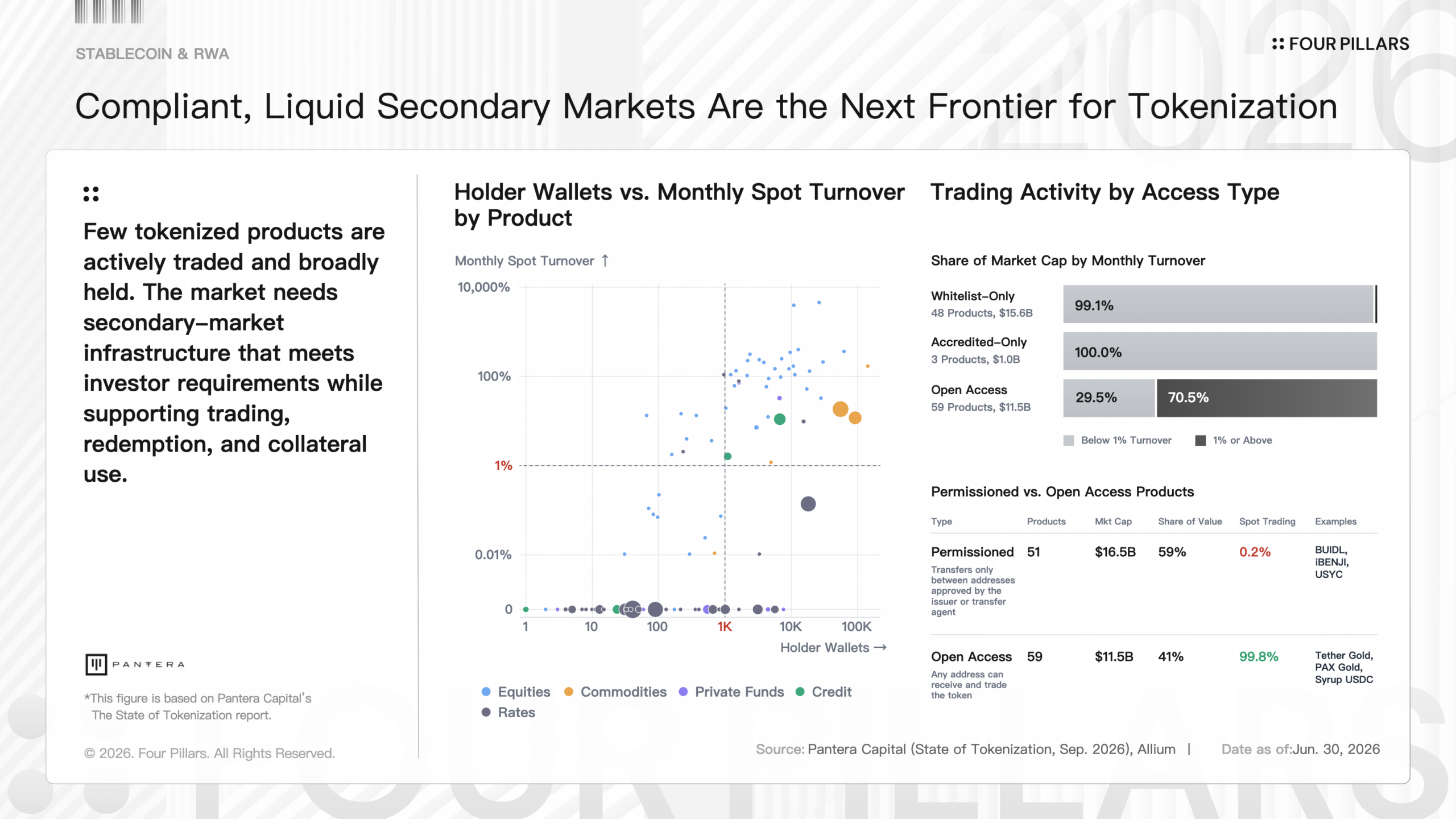
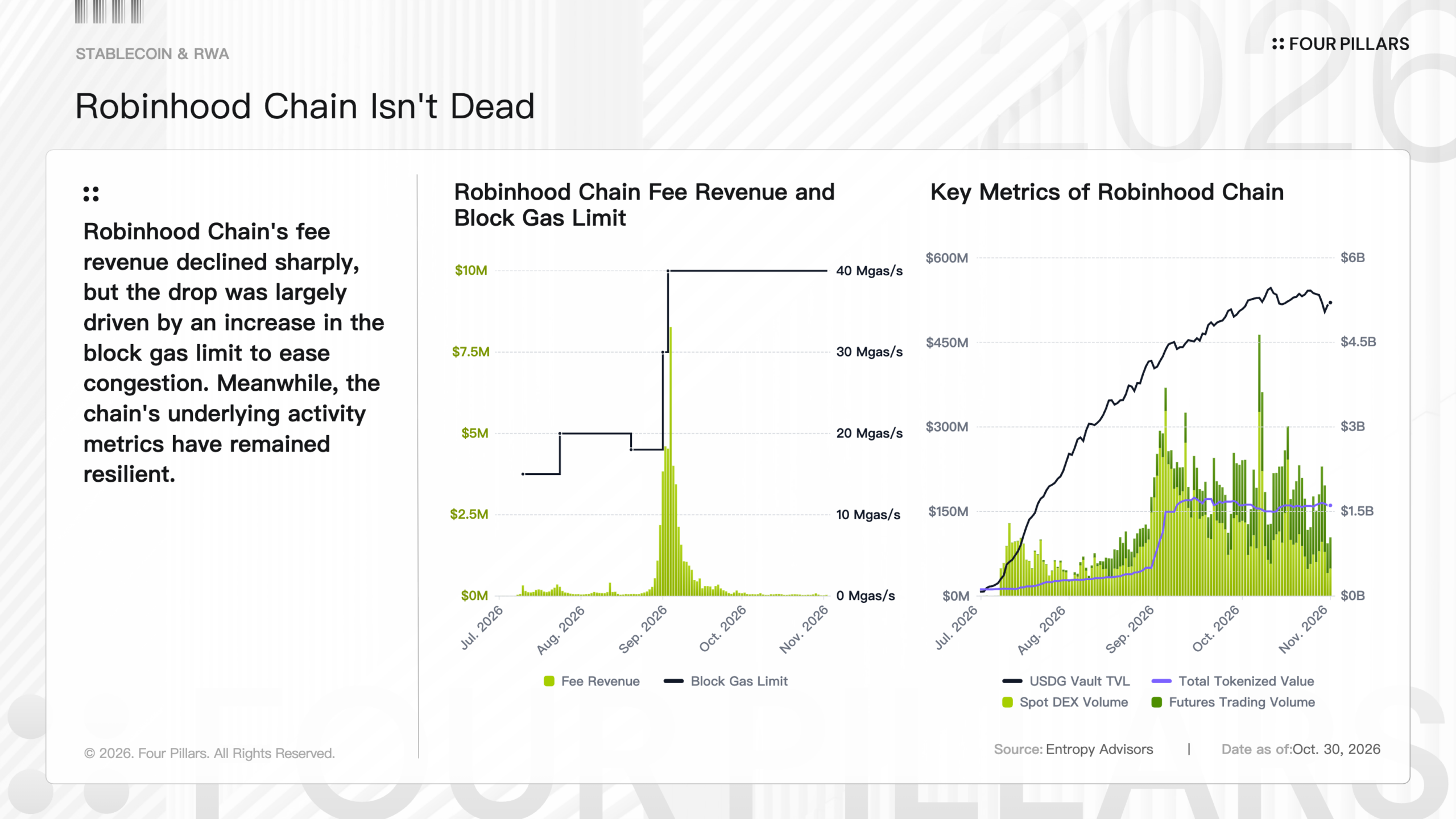
Fees offer another incomplete measure of use. Robinhood Chain’s fee revenue fell after September, around the time its block capacity increased from roughly 20 million to 40 million gas units per second. Four Pillars said the added capacity helped ease congestion, so lower fees did not by themselves establish that users had left. Robinhood reported more than $80 billion in decentralized exchange volume and over $50 million in chain fees in its mainnet’s first quarter. Trading eased from its September surge, but liquidity remained on the network through October.
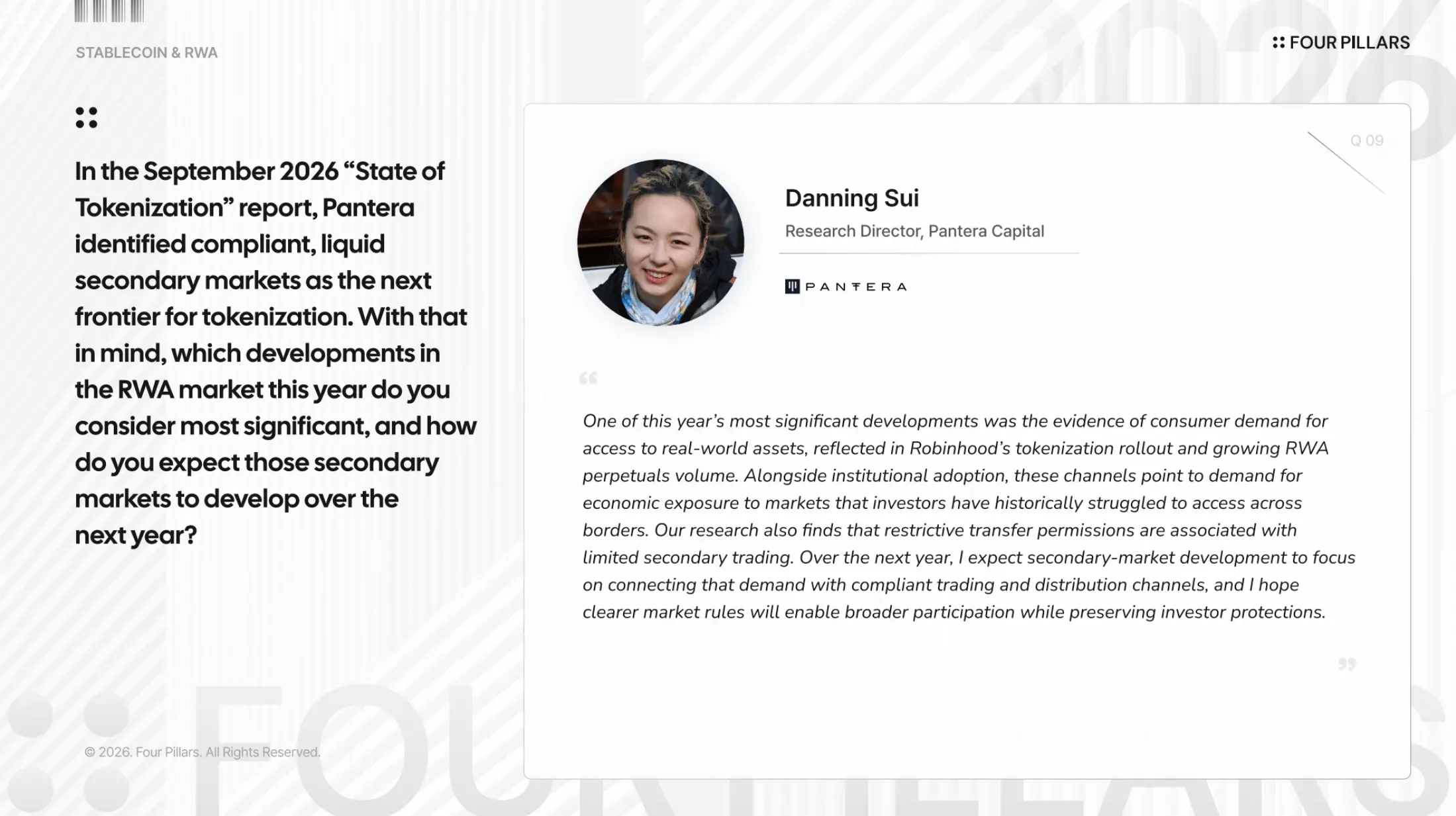
For holders, one practical question is what happens after issuance: who is allowed to buy the token from them? Pantera Capital research director Danning Sui said her team found an association between restrictive transfer permissions and limited secondary trading. She expected development to focus on connecting demand with compliant trading venues. Putting a record onchain, in other words, is different from giving its holder access to a market.