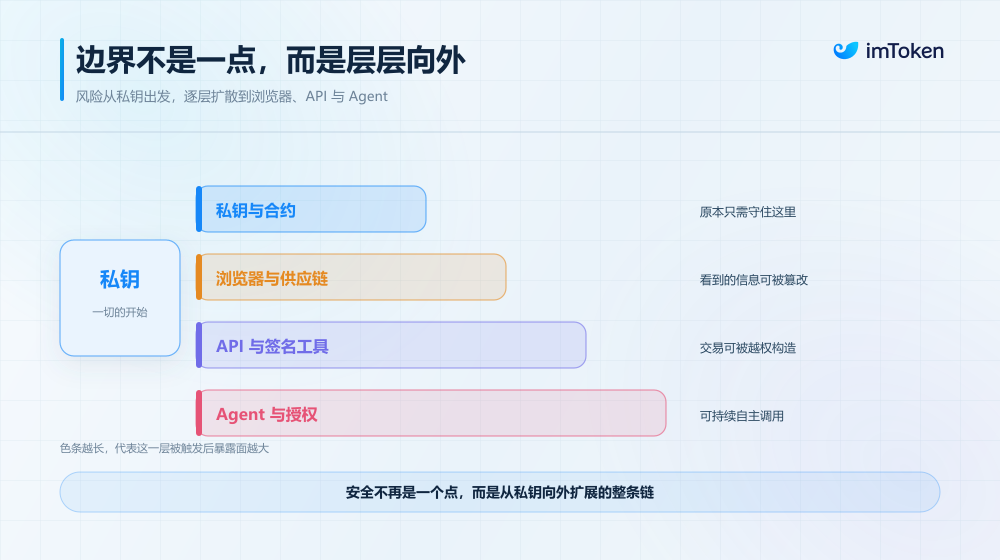
On November 14, 2026, automated trading service HyprEarn said a small number of Hyperliquid accounts that had previously authorized its Agent Wallet had experienced unauthorized trades. HyprEarn asked users to revoke the old agent’s permission and reconnect. The wallet could neither withdraw funds nor send them to an external address, but it could trade on a user’s behalf. A bad trade can cause a loss without moving tokens out of the account.
An analysis published on November 25, 2026, at 20:29:59 UTC+8 examined that distinction alongside two other security incidents. Protecting the private key and auditing the contract still matter. Neither measure, on its own, tells a user what a trading service is allowed to do between the moment it receives permission and the moment that permission ends.
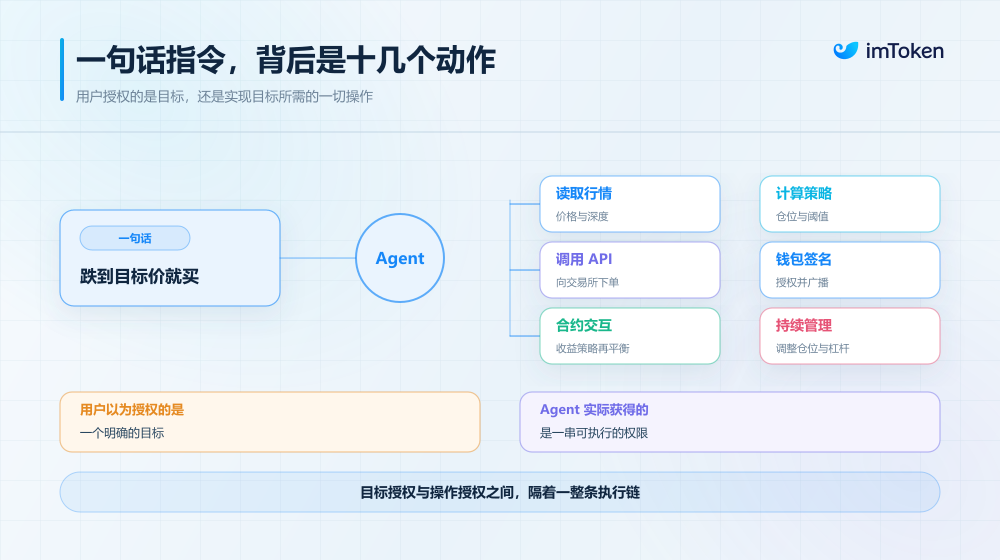
Where a transaction can go wrong
At Lighter, the credential at issue was an API signing key: a key that lets software act on a trading account. According to the disclosure following the November 16 incident, an affected account’s custom signing software reused a value meant to be unique for each signature, exposing the API key. The account already had permission to use a public pool. The attacker used that permission to move funds into the pool and redeem shares. About 10.39 million USDC was observed leaving on-chain. Lighter paused withdrawals and the creation of new pools, and its Security Council helped recover about 5 million USDC. The observed outflow was therefore not a confirmed final loss.
In the Optimizely incident, the reported compromise occurred before a transaction reached the wallet. Malicious scripts delivered through the third-party service’s official content delivery network reached more than 100 corporate websites worldwide. In users’ browsers, the scripts altered copied cryptocurrency addresses and collected information including payment card details and cookies. A user could copy the intended address and end up with a different recipient without anyone taking the wallet’s private key.
These incidents did not all involve AI. Their relevance to an agent is that one automated task can depend on a browser, a third-party tool, a trading credential and a wallet in succession.
One instruction, many actions
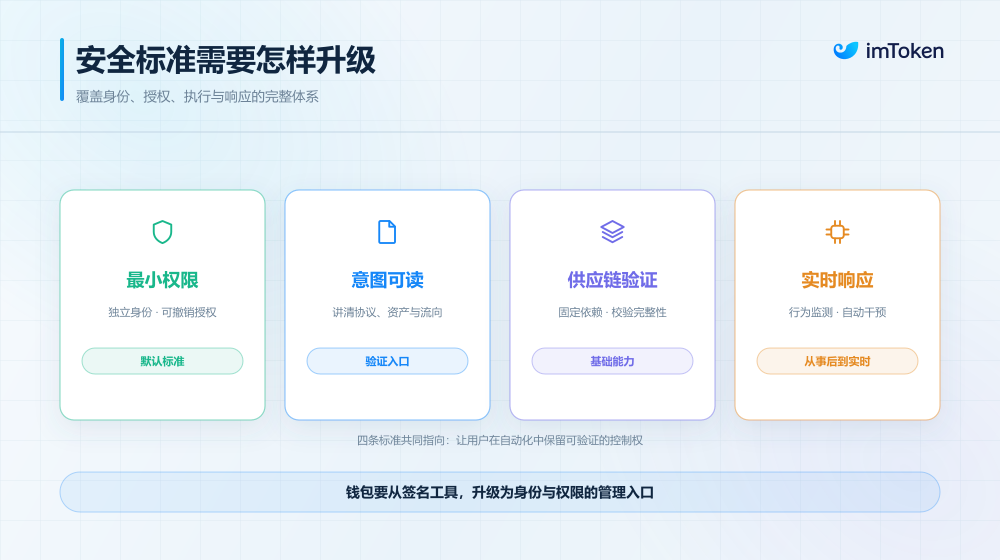
Consider the analysis’s hypothetical instruction to buy ETH on Uniswap at a target price and put the remaining funds into an Aave strategy. What sounds like one request requires the agent to read prices, call trading software, prepare transactions and obtain signatures. If authorized to manage the position afterward, it may keep acting for hours or days.
A goal is not a permission limit. Asking an agent to make recurring ETH purchases does not, by itself, prevent it from adjusting leverage or moving other assets. The analysis argues that the wallet or platform should enforce those limits independently of the model, rather than rely on the agent to interpret the request correctly every time.
What enforceable limits would look like
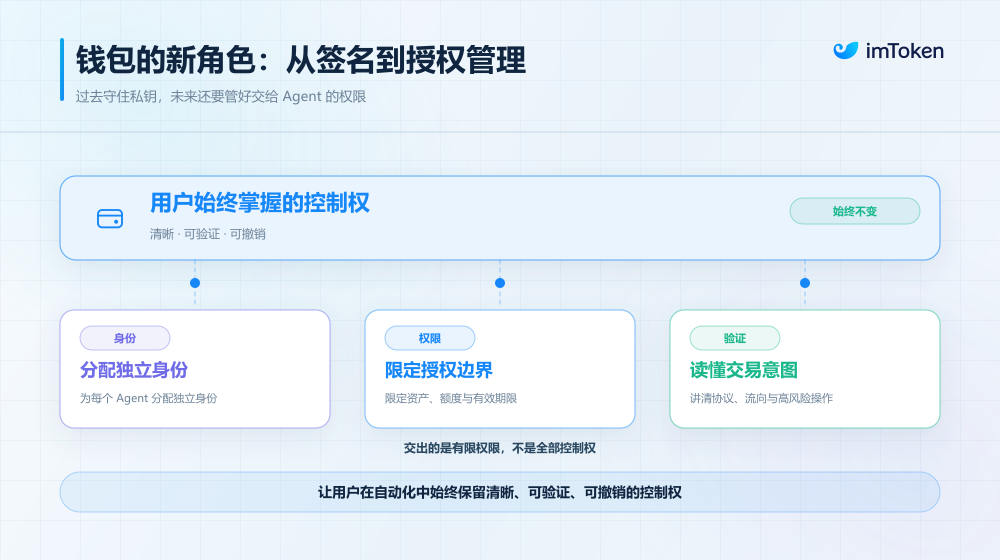
The analysis proposes four safeguards for wallets, exchanges and agent services. These are design recommendations, not rules already in force.
- Give the agent its own limited identity. Specify the actions it can take, the tokens it can use, the amount it can put at risk and when permission expires. A tool or sub-agent should receive no broader authority than the agent that calls it. Users should be able to revoke access immediately without waiting for the service provider.
- Show what the wallet is actually signing. The wallet should independently read the transaction parameters and display the protocol, contract, asset, amount and recipient. It should flag unlimited spending approvals or changes to permissions rather than relying on the model’s own summary. A simulation can show potential balance changes; large, irreversible or permission-expanding actions should retain explicit human confirmation.
- Check the tools that prepare the transaction. Platforms should verify the origin and integrity of plugins and software packages, lock reviewed versions and isolate third-party tools. A tool needed to prepare a trade does not also need unrestricted access to local files, account credentials or the network.
- Stop unexpected activity before execution. An agent assigned to occasional spot purchases might start opening leveraged positions or calling an unfamiliar contract. Platforms should monitor trading frequency, size and exposure, and pause the task or reduce its permissions when a limit is reached. A record of the request, authorization, tools, transaction parameters and result can help users trace what happened.
Revoking an agent’s permission can stop its next trade; it generally cannot undo a completed on-chain transaction. That is why the useful question at authorization is not just “Can this agent withdraw?” It is also “Which trades can it make, with which tokens, for how much and for how long?”