
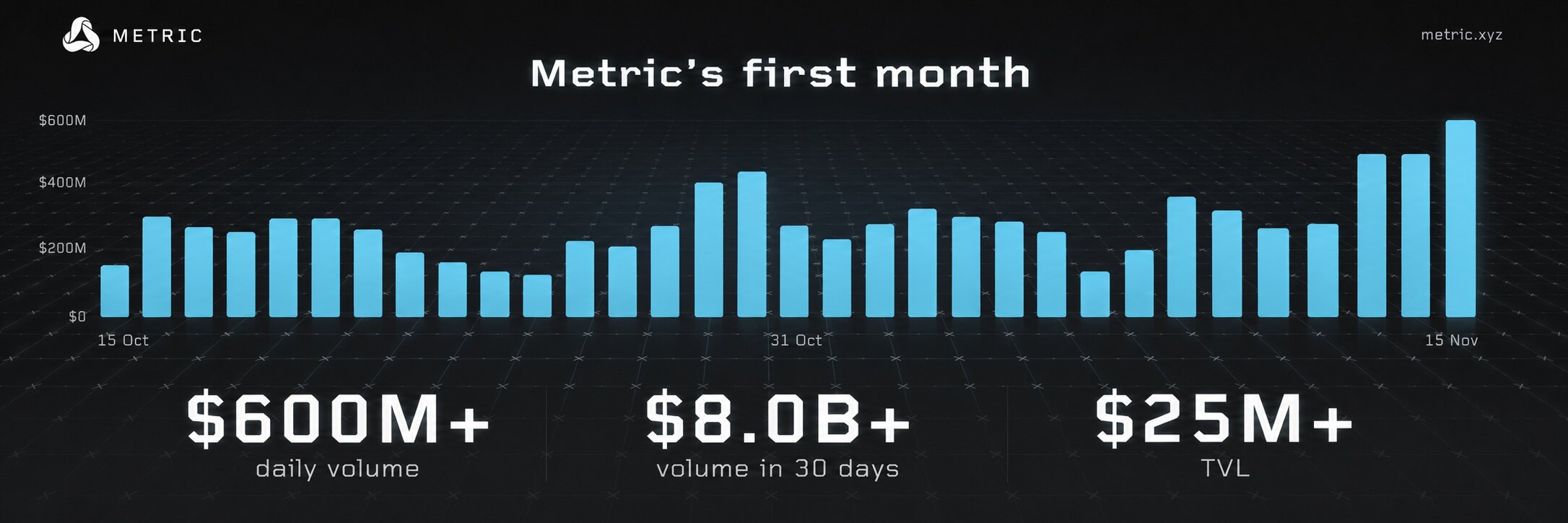
As reported on November 17, 2026, decentralized spot exchange Metric was drawing attention for its trading volume and a newly announced points program. On November 15, Metric disclosed that trading volume had exceeded $8 billion in its first month after launch and $600 million in a single day, while total value locked (TVL) was just over $25 million. Those are figures disclosed by the project, not a measure of what liquidity providers earned.
How its liquidity pools work
Metric’s Active Pools are designed to move their quoted price ranges with an external reference price. A pool can use a price provider drawing on an oracle, on-chain data or a custom pricing strategy; Metric’s public code includes integrations for Chainlink and Pyth. The approach is intended for assets with an external reference price, including tokenized stocks, gold, foreign exchange, BTC and ETH. Metric supports private pools run with a market maker’s own funds and public pools that accept other liquidity providers’ funds.
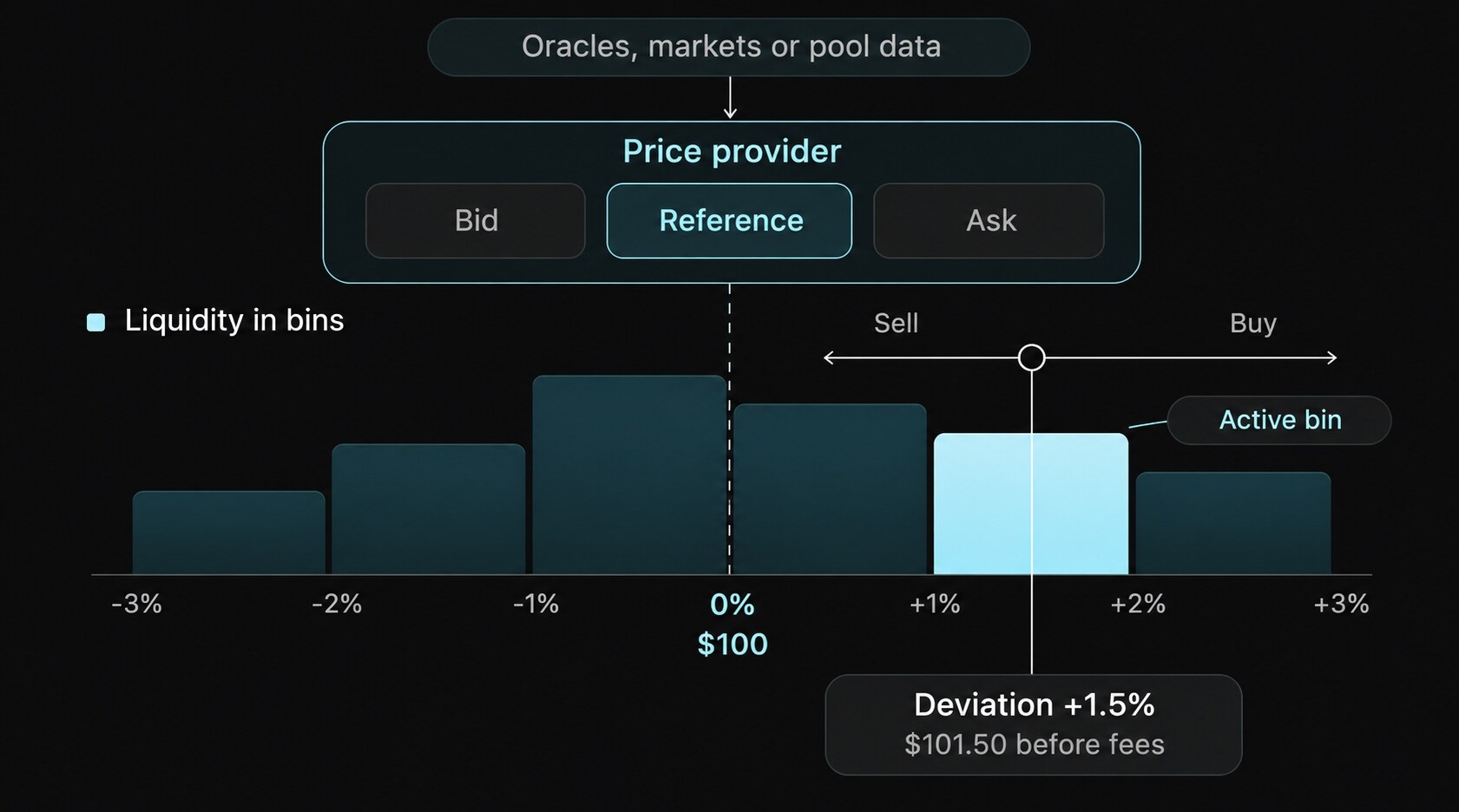
Liquidity providers place assets into price ranges called Bins. In Metric’s example, a range 1% either side of a $3,000 ETH reference price spans $2,970–$3,030. If the reference price rises to $3,300, that range moves to $3,267–$3,333 without the provider withdrawing and redepositing funds. Moving the quoted range does not automatically buy or sell the tokens in the position.
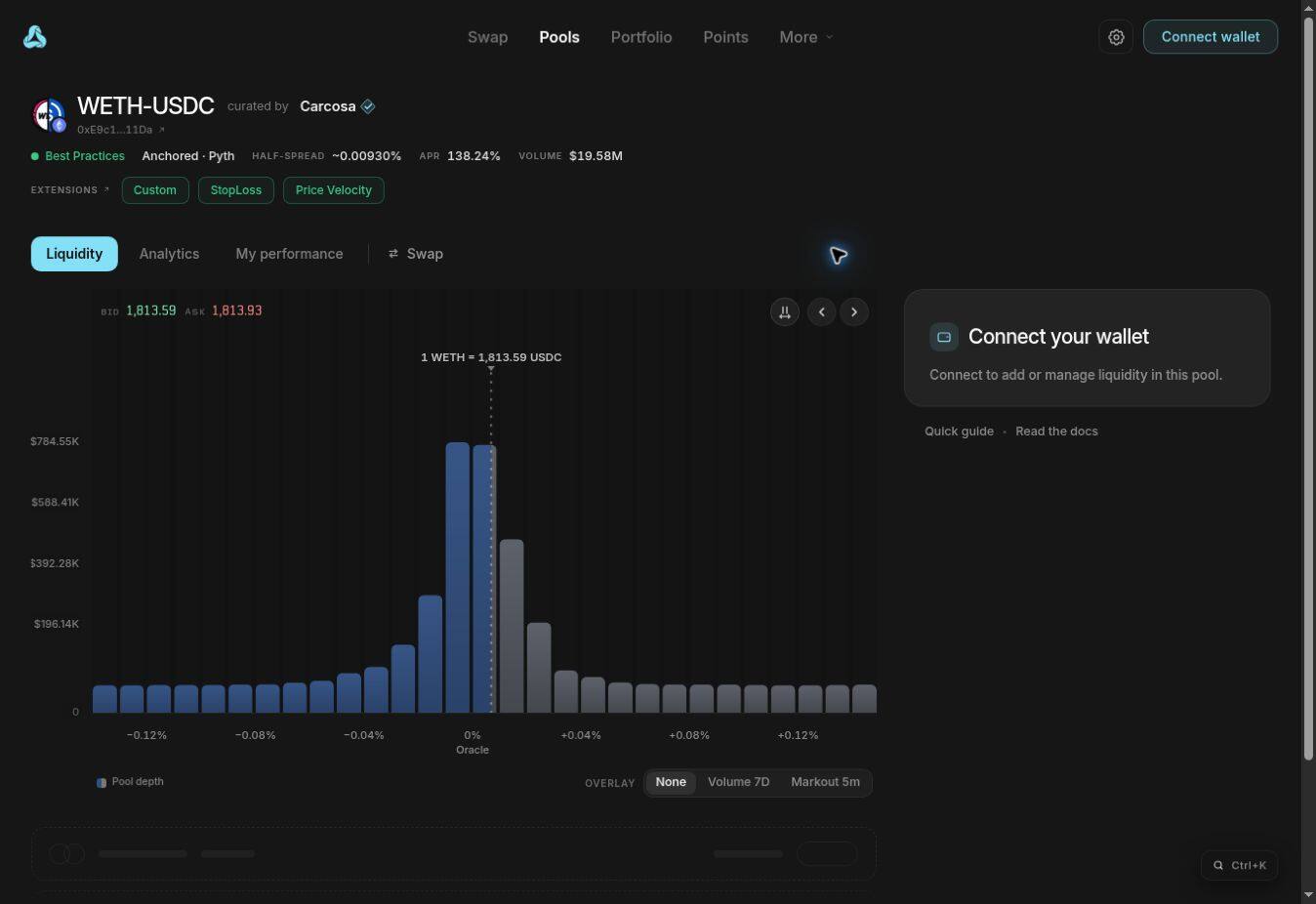
Keeping liquidity near the reference price can help the same funds participate in repeated trades, which helps explain how trading volume could greatly exceed TVL. It does not remove price impact: a large trade can use up liquidity in one Bin and move into the next at a worse average price. Trading also changes the assets a provider holds. Metric’s Markout APR compares execution prices with reference prices after trades to assess whether those trades favored the pool; it can be negative. Trading spreads may still be outweighed by asset-price declines or losses from stale quotes.
What the points announcement covers
On November 13, 2026, Metric announced a program allocating 1 million points per week across trading, liquidity provision, pool management and user invitations. It said points had been counted since October 15, including activity in the preceding four weeks. Each weekly accounting period ends Wednesday at 8 p.m. Beijing time, with points distributed automatically on Thursday.
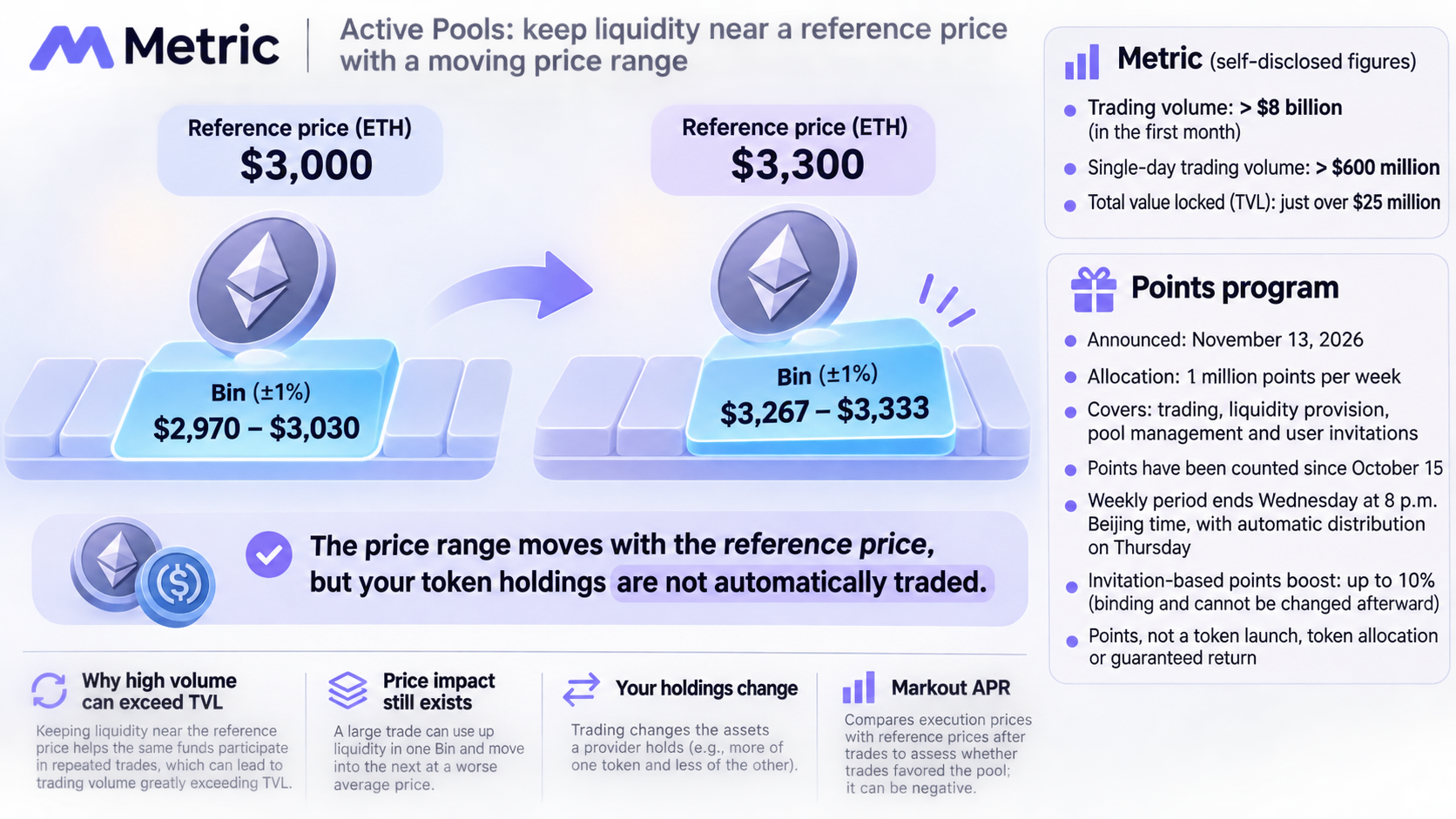
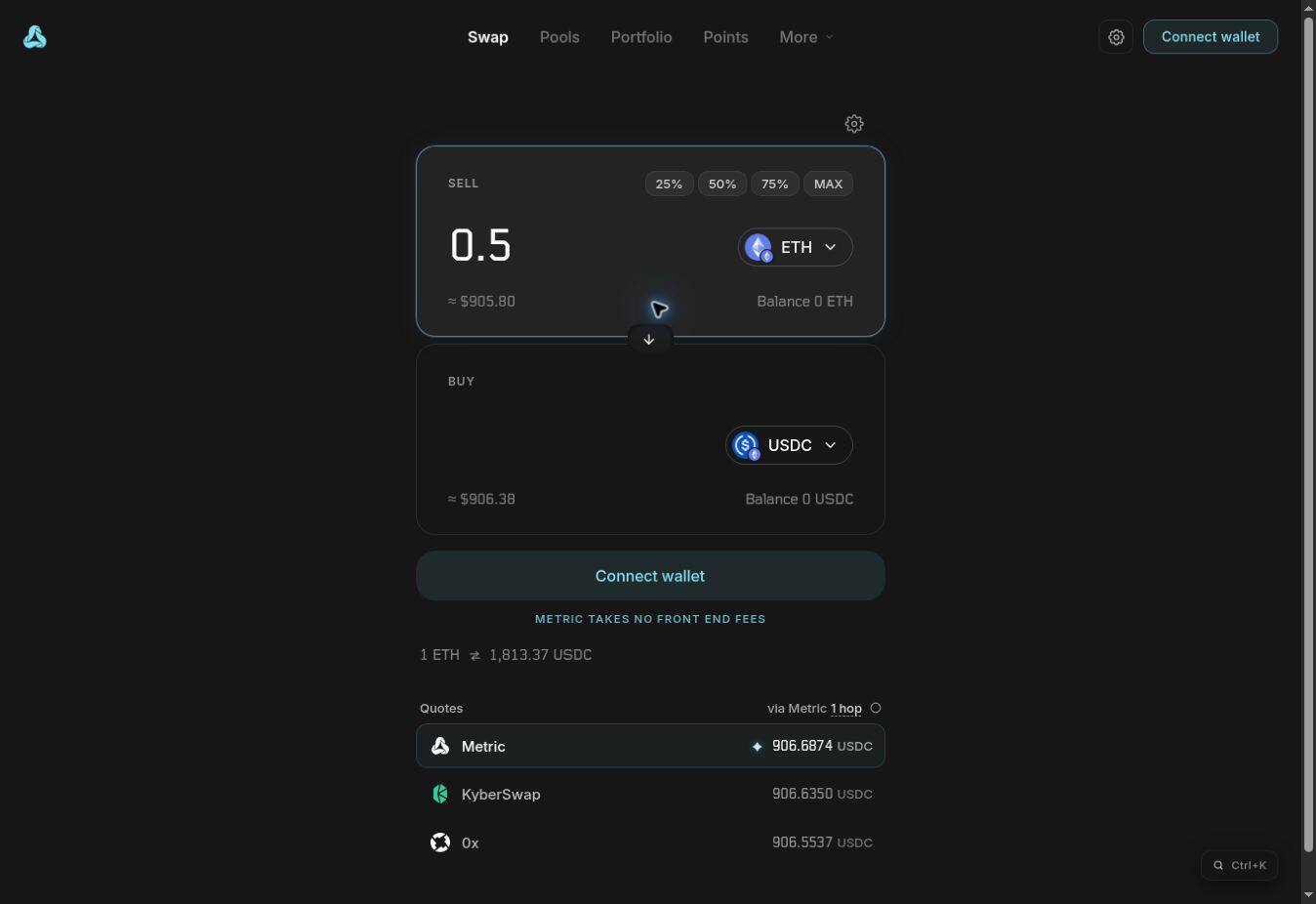
A swap made through Metric’s interface does not necessarily use a Metric pool. According to the report, a trade must use a Metric route marked with the points indicator to qualify for trading points. Metric also described an invitation-based points boost of up to 10%, with a binding that cannot be changed afterward. The announcement describes points, not a token launch, token allocation or guaranteed return.