This article reflects reporting published on November 13, 2026, at 16:37 (UTC+8). The figures and year-to-date comparisons below belong to that reporting period.
A protocol can earn substantial revenue without passing any of it to its token. Most crypto tokens do not give holders legal ownership of the business or a claim on its profits. A buyback is one way a protocol may connect the two: it uses funds to purchase tokens on the open market, then may burn them, lock them, or hold them in a treasury. None of those actions guarantees a higher token price.
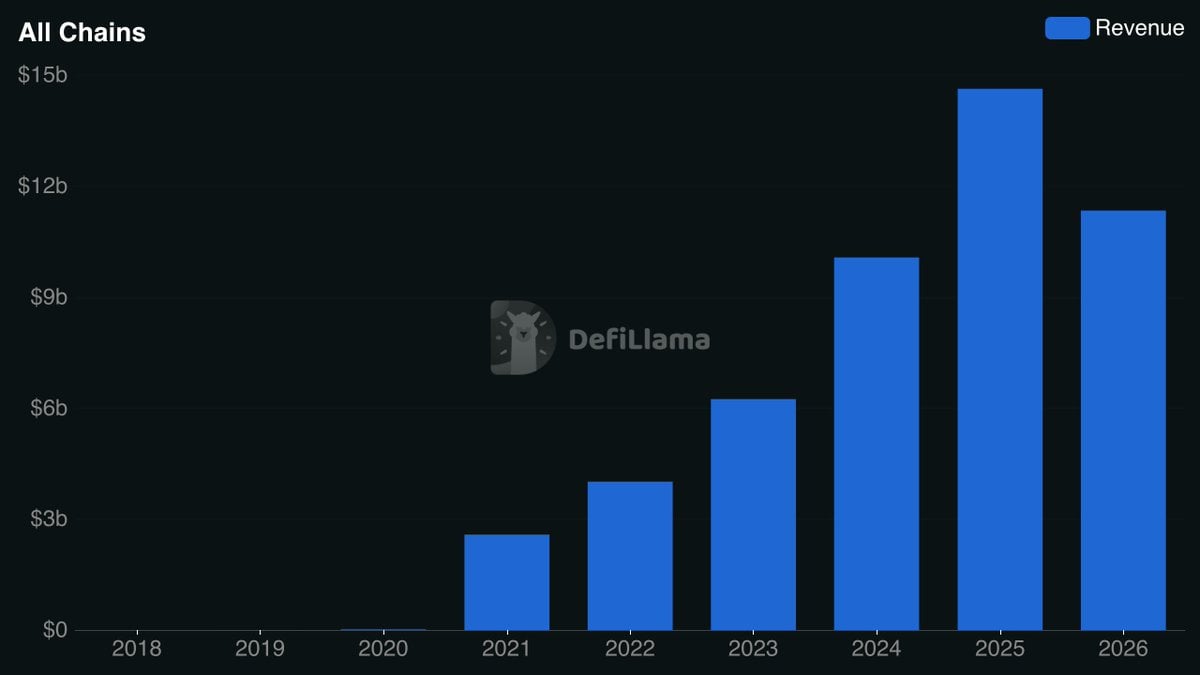
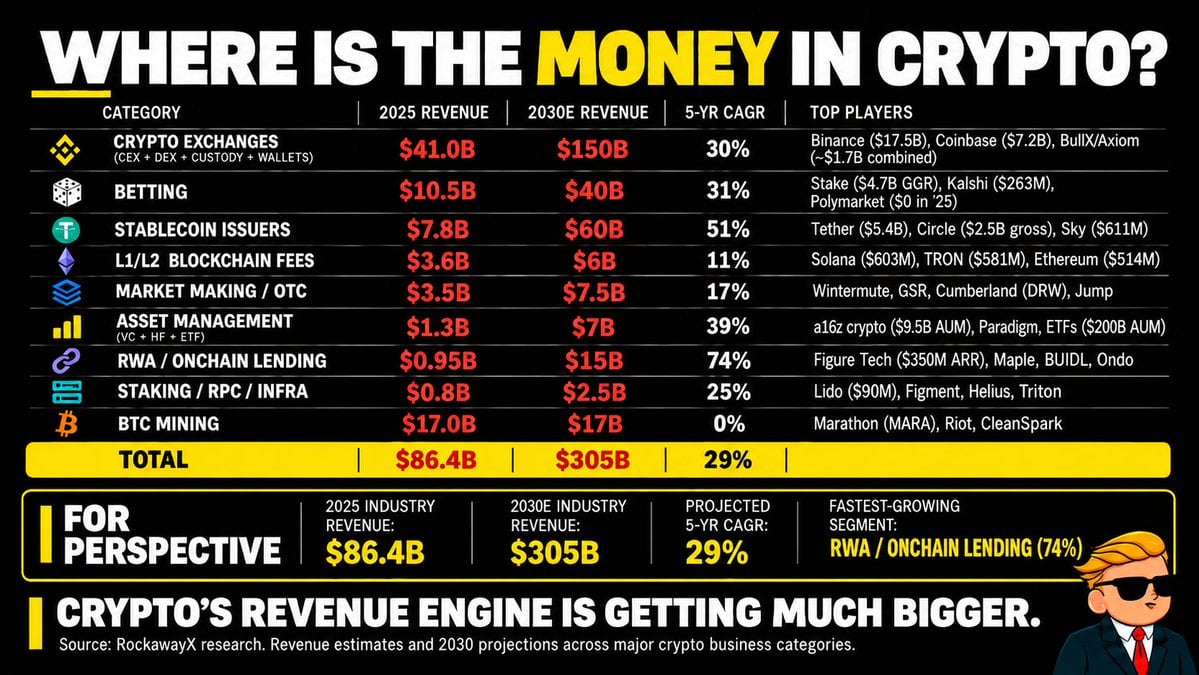
The source, written by WallStreetBets and translated by TechFlow, reported $11.68 billion in on-chain protocol revenue year-to-date in 2026. Its approximately $13.9 billion full-year estimate was conditional on November and December staying near October’s level—not a reported full-year result.
Why buyback spending is not enough
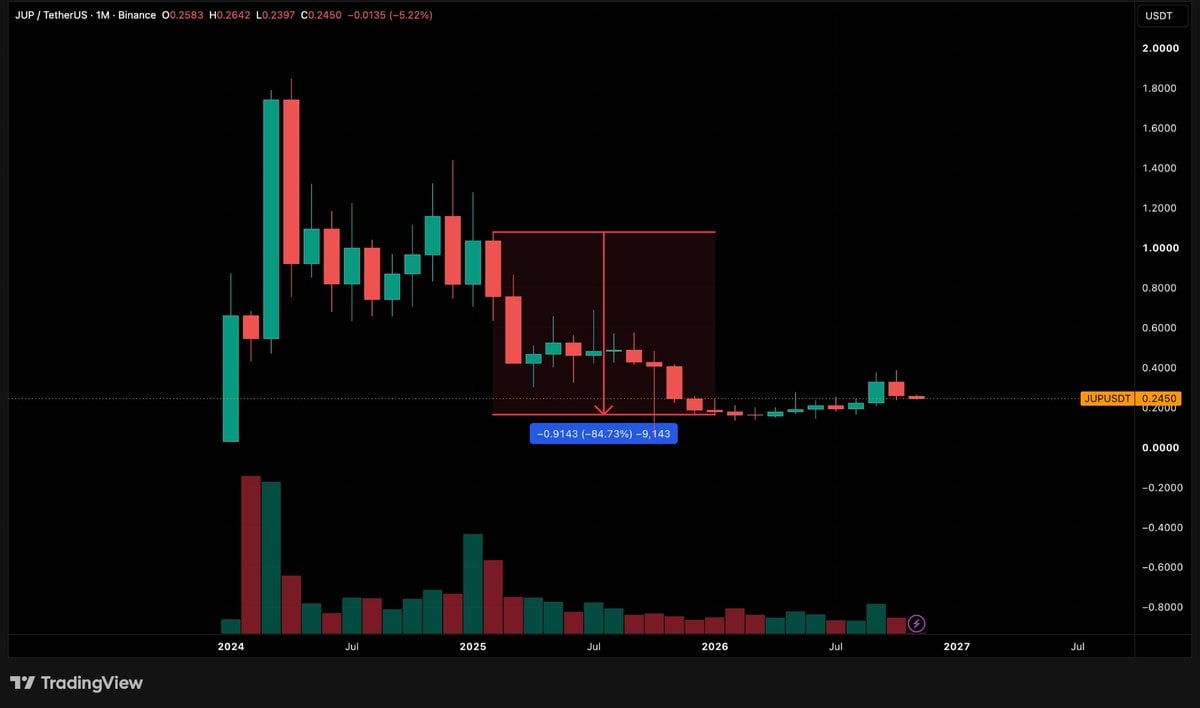
According to the article, 28 major projects spent more than $1.4 billion on buybacks in 2025, yet only three of the ten largest buyback projects—AAVE, HYPE, and SKY—outperformed Bitcoin that year. Jupiter illustrates the limits of purchase demand: it began directing 50% of on-chain protocol revenue to JUP buybacks in February 2025 and had spent more than $70 million by January 2026, while JUP’s price still fell substantially. The author places that result in the context of a broader Solana-ecosystem decline.
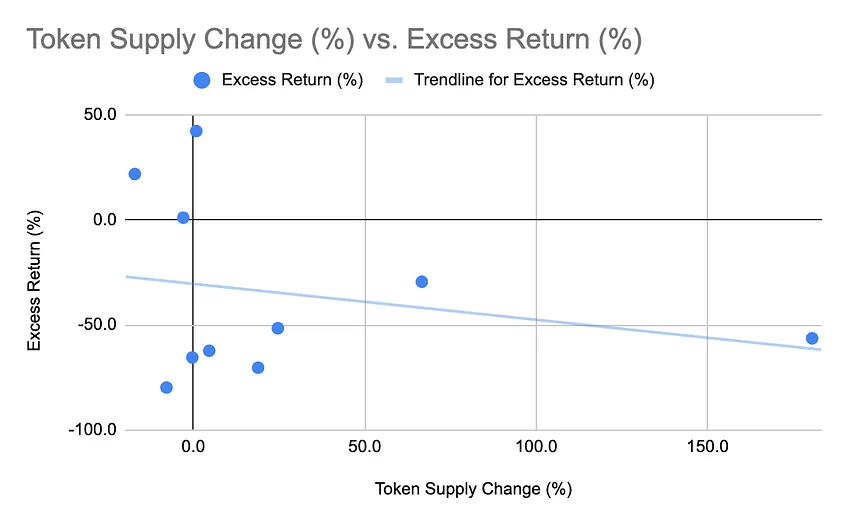
New supply matters too. If unlocks, inflation, or other distributions put more tokens into circulation than buybacks absorb, the purchases may do little to improve the token’s supply-and-demand balance. The article cites research finding a negative correlation between supply growth and relative market performance among major buyback projects; correlation alone does not establish that buybacks determine returns.
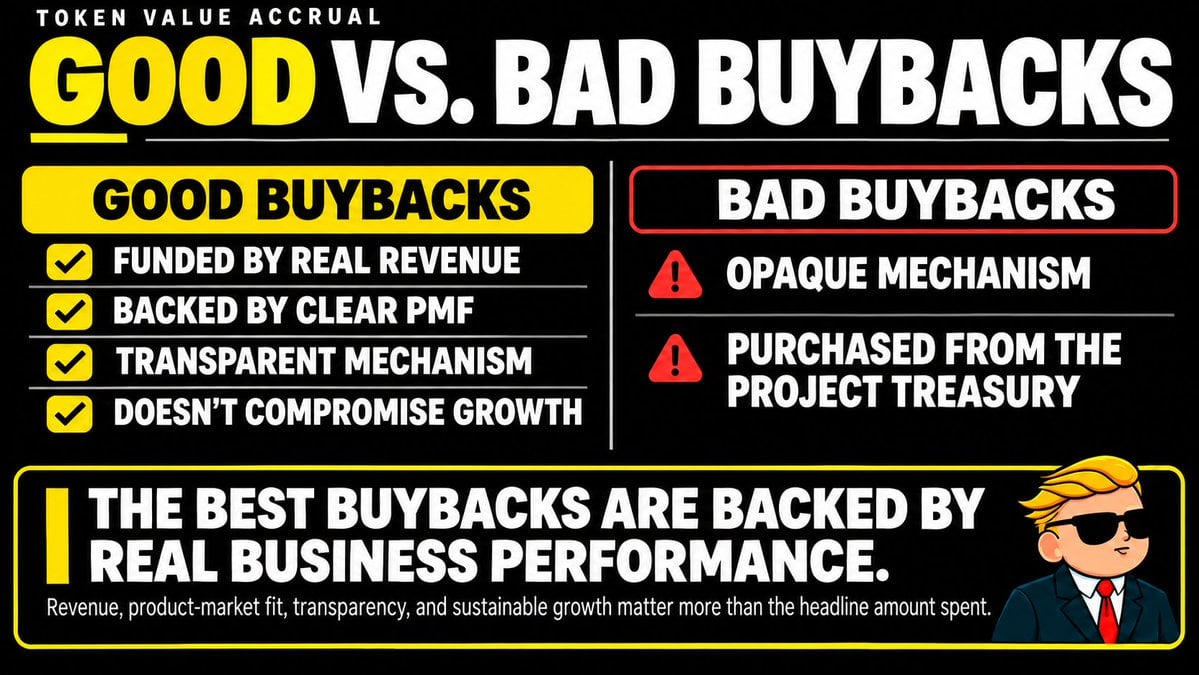
The author proposes four checks: whether purchases are funded by genuine business revenue; whether recurring demand can sustain that spending; whether holders can verify the funding, execution, and destination of purchased tokens; and whether buybacks leave enough resources for growth and financial resilience. A fixed percentage of revenue spent automatically is predictable, but it may not always be the best use of funds.
What the 2026 comparison shows
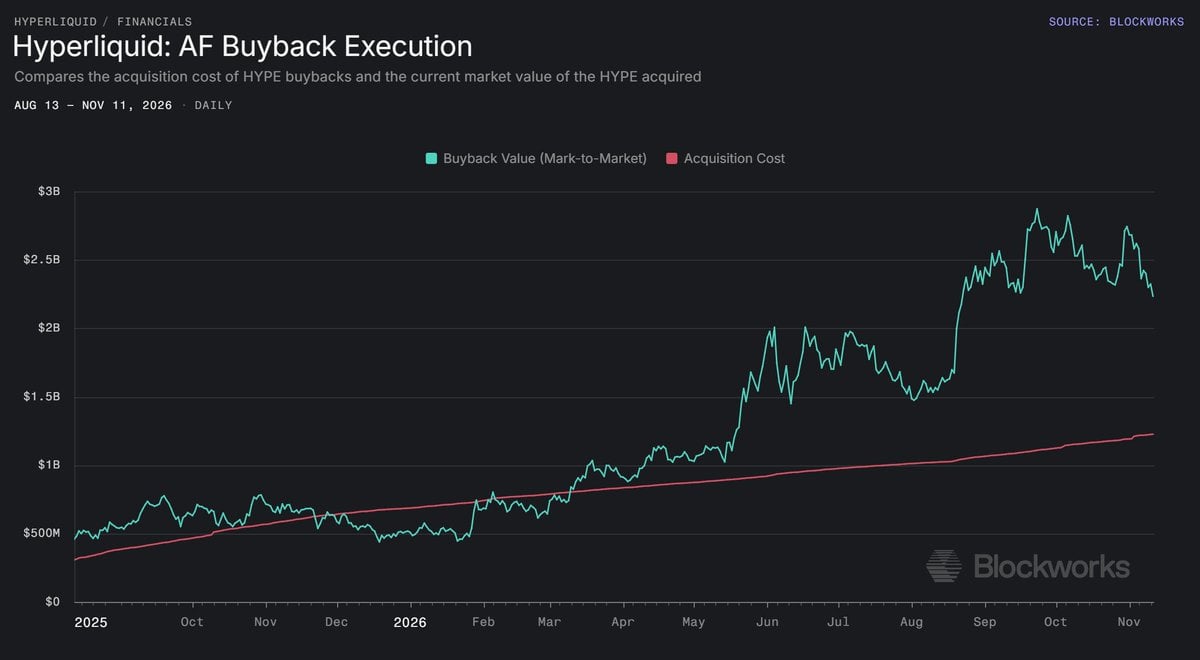
The article reported more than $900 million spent on token buybacks and related burn mechanisms in 2026 by its publication date, led by Hyperliquid at more than $505 million and Pump.fun at more than $269 million.
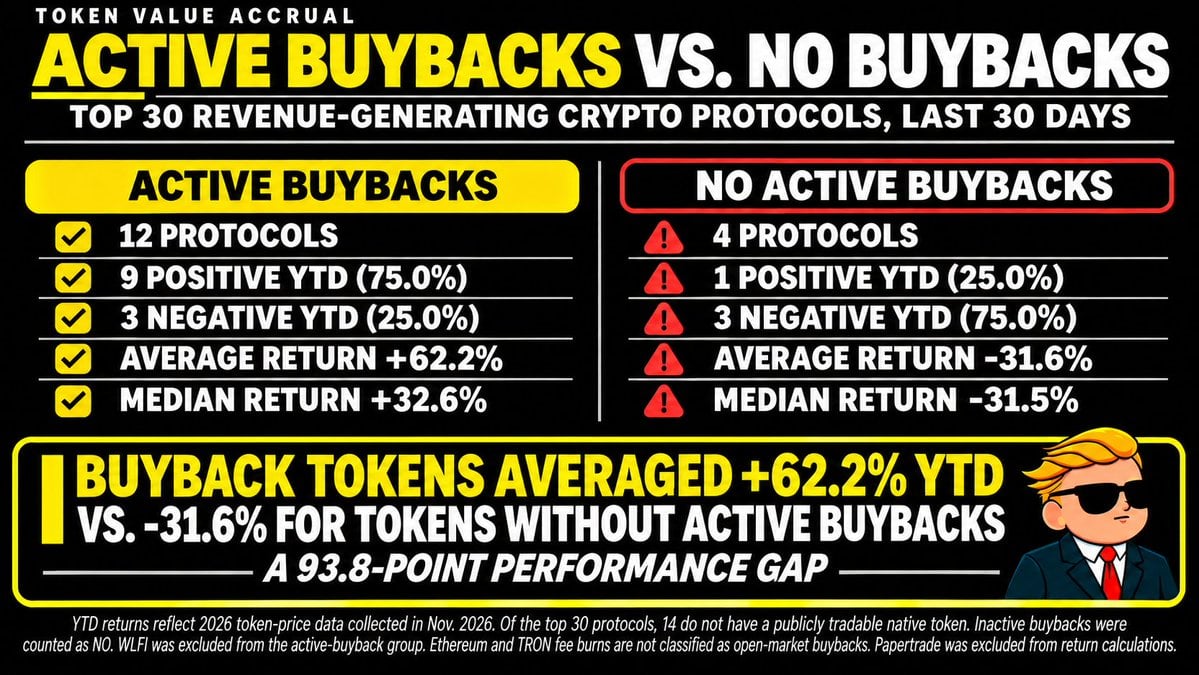
For its comparison, the author examined the 30 protocols with the highest revenue over the preceding 30 days. Fourteen had no publicly tradable native token. Of the remaining 16, twelve had active buyback programs: nine tokens had positive 2026 year-to-date returns and three had negative returns, with a 32.6% median return. Of the four without active buybacks, one was positive and three were negative, with a −31.5% median. The article says the return figures used token prices collected in November 2026. These are small, selected groups, not proof that buybacks caused the difference.
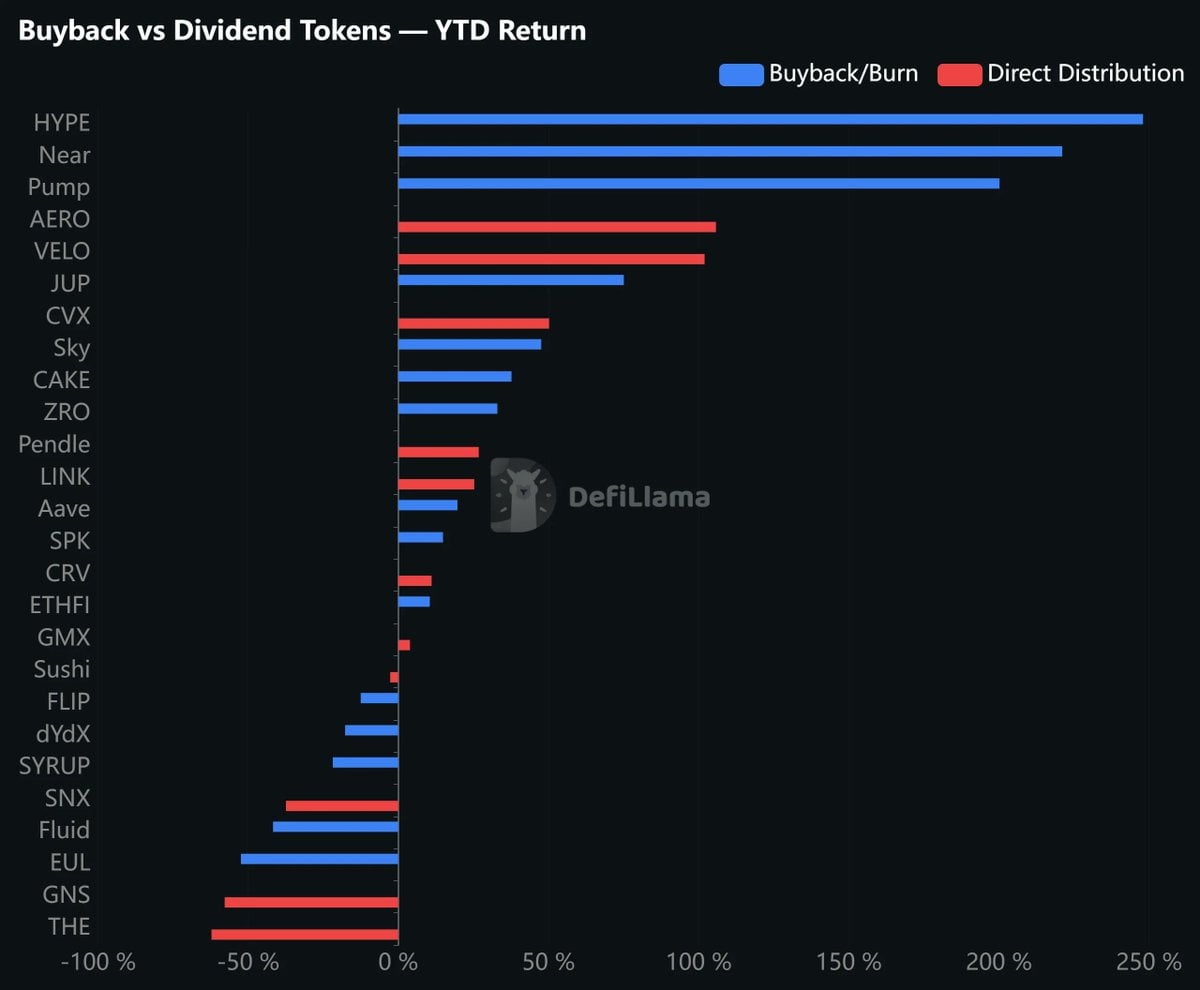
Different ways revenue can reach a token
The article describes several distinct mechanisms rather than one standard token-holder entitlement:
- WLFI: World Liberty Financial had begun using part of the reserve-related income associated with its USD1 stablecoin for WLFI buybacks. The source described that income as exceeding $150 million on an annualized basis. A WLFI token is not the same thing as ownership of the stablecoin issuer or its reserves.
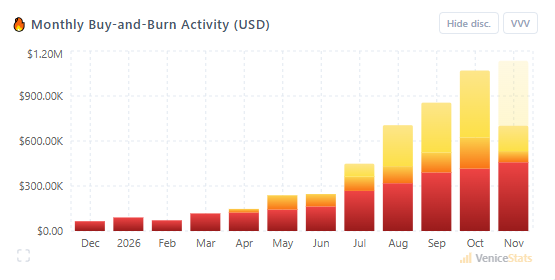
- VVV: Venice reported burns tied to subscriptions and API-credit purchases, alongside discretionary burns. The article said it removed about $458,000 worth of VVV in a November 9 discretionary burn. A burn removes tokens from circulation; it does not itself promise holders a payment.
- Bittensor subnet tokens: Citing SubConnect’s index as of August 2026, the article said 14 of 24 subnets with external revenue used it to buy back their Alpha tokens. It reported estimated combined annualized revenue of $28 million–$35 million for those 24 subnets. These Alpha tokens belong to individual subnets, not to the businesses as ownership shares.
- LONG 500: The article said the mechanism introduced by long.xyz in September directed 5% of stock-token trading fees from new pairs to a community treasury accumulating tokenized stocks, and another 5% to buy and burn the paired community token. The treasury’s assets and a holder’s rights to them should not be treated as interchangeable.
The practical distinction is between a business earning revenue, a rule for using some of that revenue, and the rights a token actually grants. Before drawing conclusions from a buyback figure, readers need to know the source of the funds, what happens to purchased tokens, and how much new supply may enter circulation.